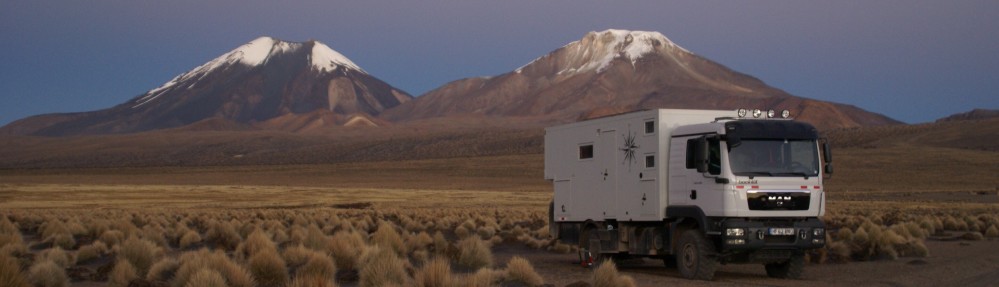
What's the best place to get away from the heatwave in the rest of Europe? How about a rock in the middle of the Atlantic far north east from the top of Scotland. Even in August the Faroes Islands is a bracing place with swirling fog, refreshing downpours and a very fresh breeze. Goodbye shorts and sunglasses, hello gortex and woolly hats. We definitely felt as far away from the scorching temperatures of the rest of the continent as we could.
Why the Faroe Islands? You might ask. Well for our last trip in the truck, we had decided to explore the unique environment of Iceland and the ferry from Denmark offered a few days stop in the Faroes, so why not? We are always interested in different sort of places.
We know this five week trip won't be the same as our 4 years driving around the world but we wanted an exciting destination that would be great to do in the truck.
In the week's drive northwards through Denmark we skirted up the coast, exploring the sand dunes and long sandy beaches. Alisha turned 13 beside a trout lake full of clever fishes that alluded Steve's rod.
The day and a half ferry to the Faroes was full, with 1,400 on board. It was half full of families of Faroese returning home in their caravans and half full of mainland Europeans with their own cars. As well as cars, the hold was full of goods trailers all carrying fish from the smell that permeated all the stairwells. It was easy and smooth sailing, the only shock was the expense and poor quality of the food available.
We emerged from the boat's bowels at 10pm, into pitch black and driving rain. As always in the morning, everything looks better. As we drove across two of the larger islands, we got to appreciate the beauty of the soaring green cliffs dramatically drop down into the sea below. Just off shore, weirdly shaped rock stacks full of nesting seabirds seemed to be round every corner. These amazing formations left us questioning just how they were geologically possible. Grey layers of basalt rock from ancient volcanic eruptions lay in stripes interspersed with emerald grass clinging to the vertical cliffs above us. Deep furrows in the rocks were formed over millennia by the many waterfalls plunging downwards.
Mulafossur Waterfall drops dramatically straight into the sea. The village behind sits in a bowl of mountains crowned by clouds. A couple of hours later the optical illusion of Lake Leitisvatn, where it appears the lake at the top of the cliff is higher than the sea below, eluded us as driving rain and mist made for a very wet walk.
All that precipitation creates a wonderfully fecund and lush surroundings, there are few trees, but the grass is startlingly green. What I loved most of all was that many of the houses were roofed with turf. Great insulation, it also looked beautiful and prompted much speculation amongst the girls if you needed to mow your roof or just send one of the many sheep up to keep it tidy. Hanging under some of the eaves we saw the traditional style cod drying and fermenting.
It is only possible to see the black volacanic sand beach of Saksun at low tide. The way in is through a gorge with waterfalls dropping into the shallow tidal waters, grass clinging to the steep wall where a little soil had gathered. In the tiny isolated village the turf roofed church stood looking cozy as it was buffeted in the winds coming off the sea.
Around the islands grass was being cut and dried, ready for winter fodder for the 70,000 sheep that live in the Faroes (human population is under 50,000). I've never seen tractors fitted with extra tyres on both front and back but here they are needed to give traction on the steep ground. In some places the grass was painstakingly stacked on multiple wires, strung between fence posts and netted, to help it dry and stop it blowing away in the wind.
The three main islands are linked by long undersea tunnels making it easy to get around. The excellent roads snaked over high passes, giving amazing vistas over the swirling seas around every corner. So it was just typical that on one of the only single width roads, we encountered a local truck much the same size as us. I waved Steve back into a tiny passing place, whilst the other truck inched past with just a couple of centimetres between the two vehicles. It reminded us of all the hairy passing places we've had to navigate all over the world. This time I was very thankful that there was a barrier, stopping up plunging hundreds of metres down to the seas below.
The capital, Torshavn, seemed a busy lively place with smart shops and a striking modern cathedral. Knowing that we have several hours to explore the city on the way back on the ferry we spent our time out enjoying the islands' beautiful countryside. With just 3 days in the Faroes, we only scratched the surface but it is did give us a chance to admire its deep fjords, amazing scenery and, of course, refreshing weather - that summer heatwave seemed a long way away.
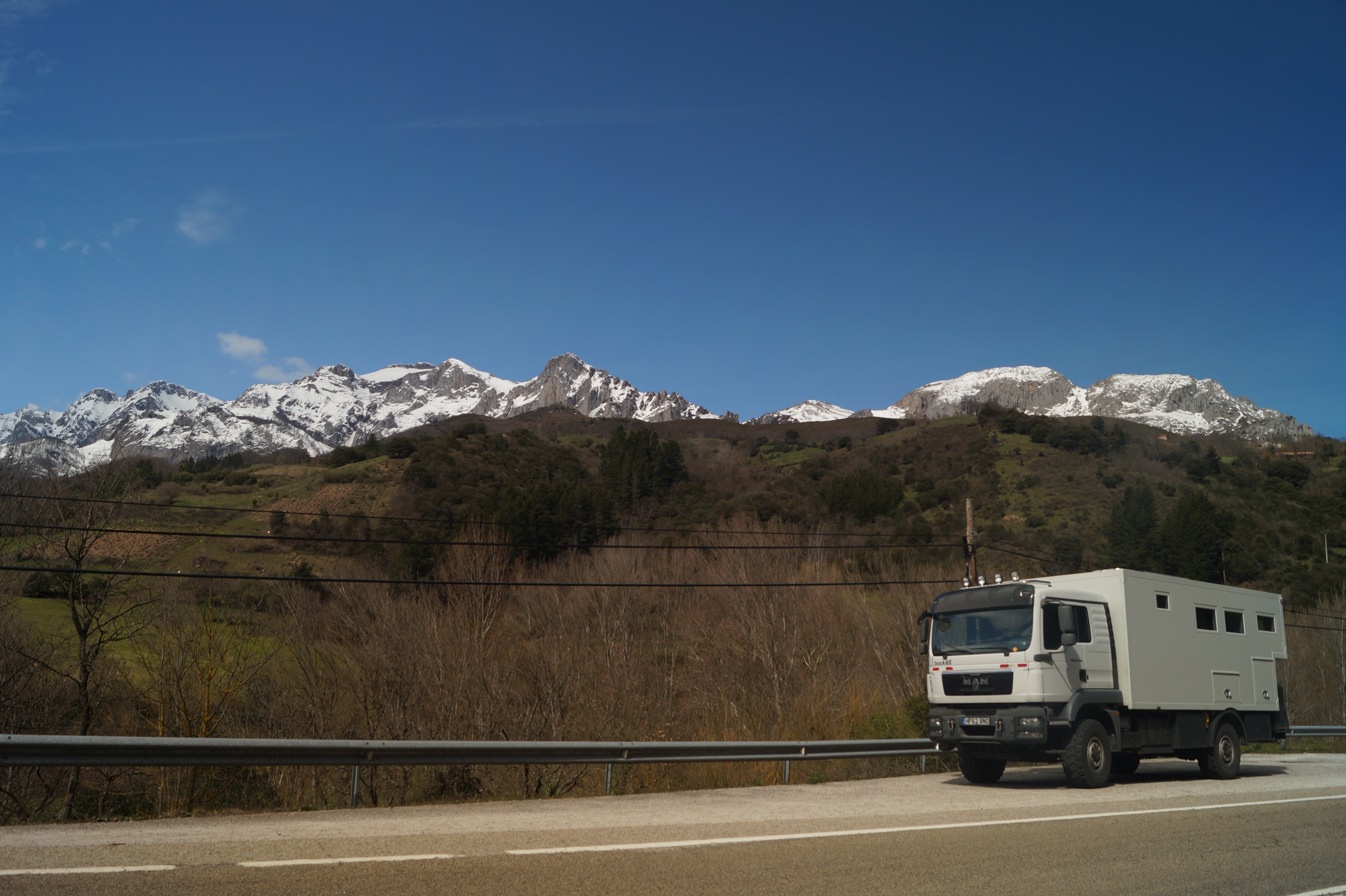
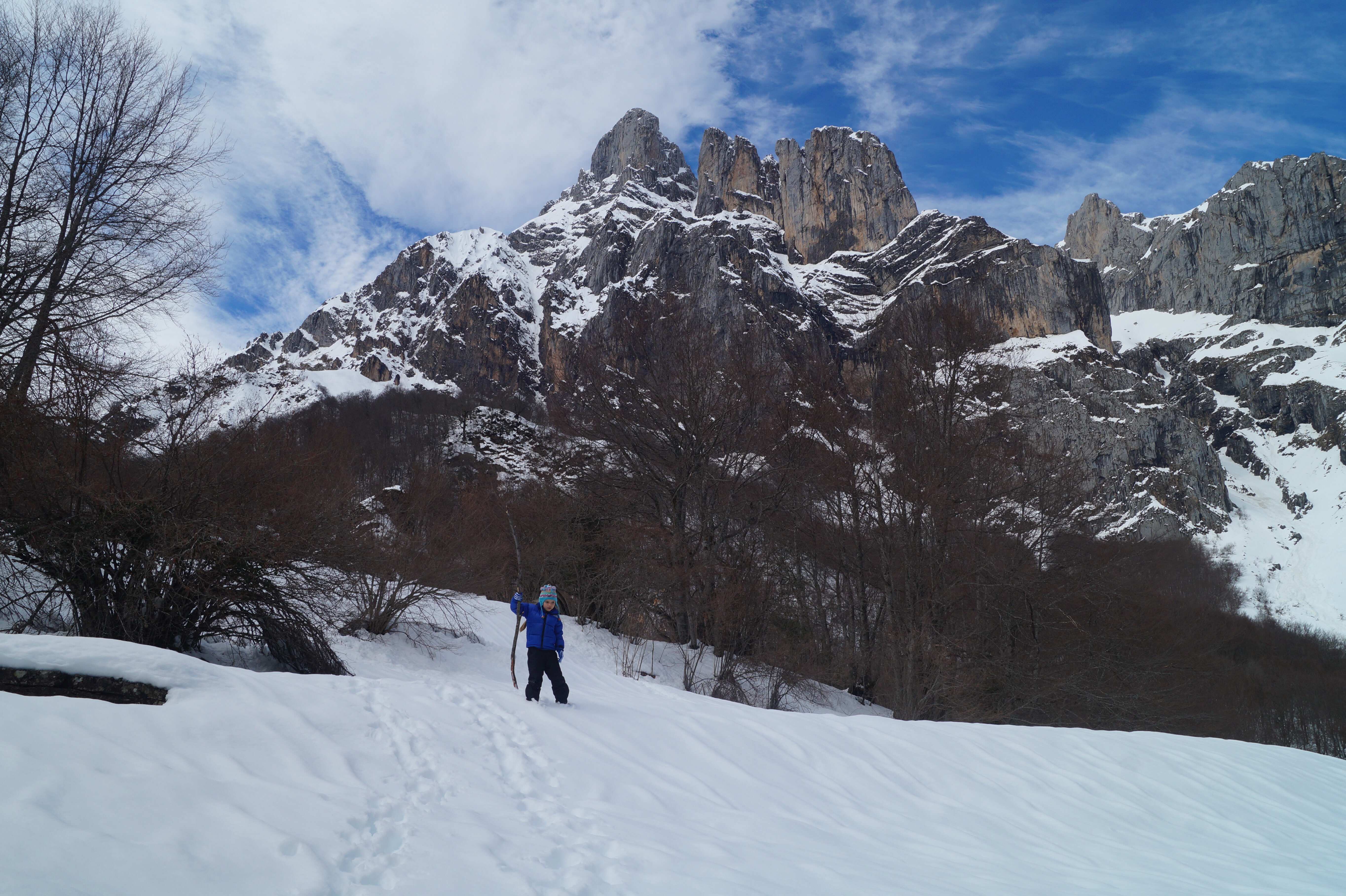
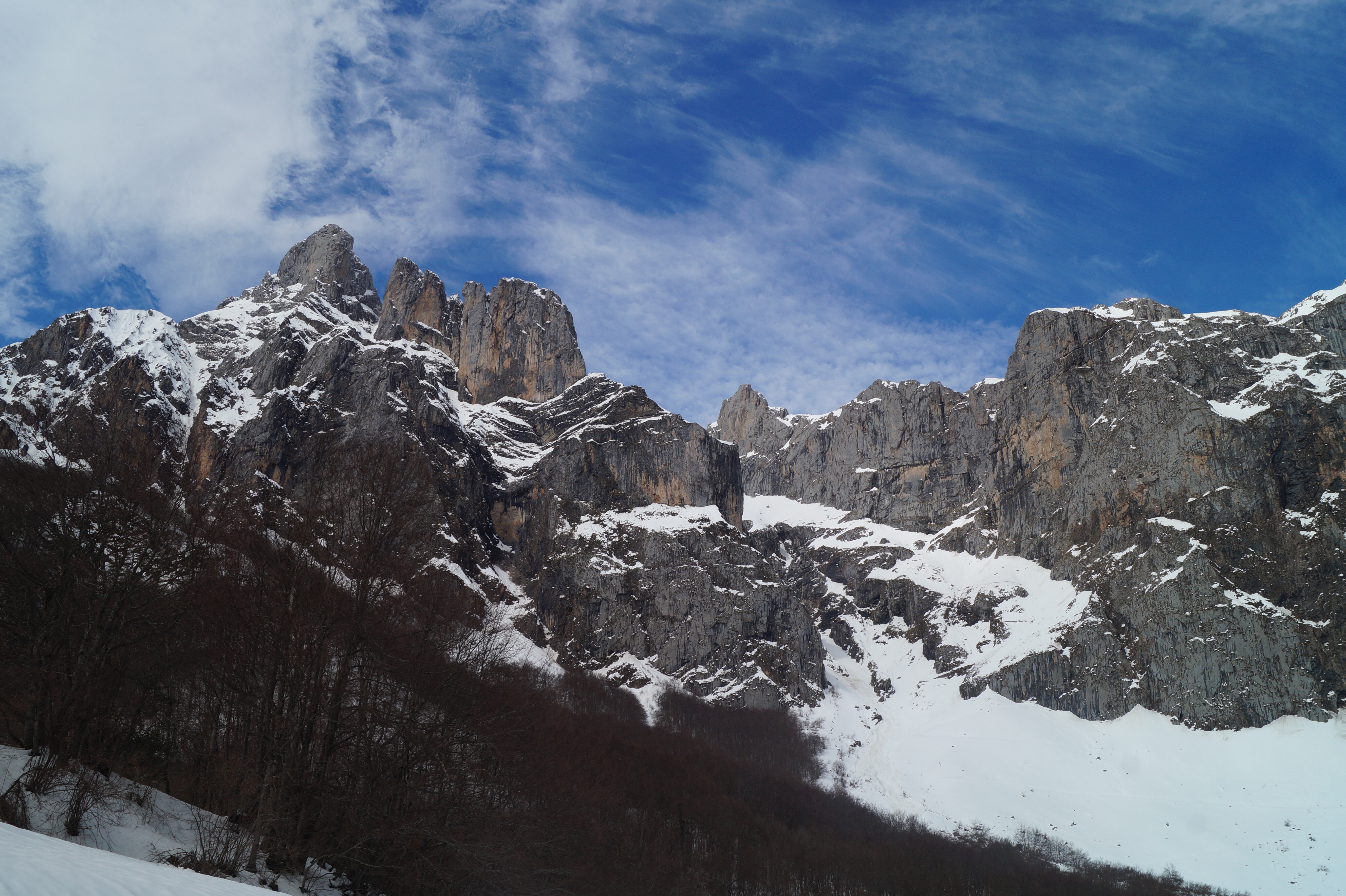
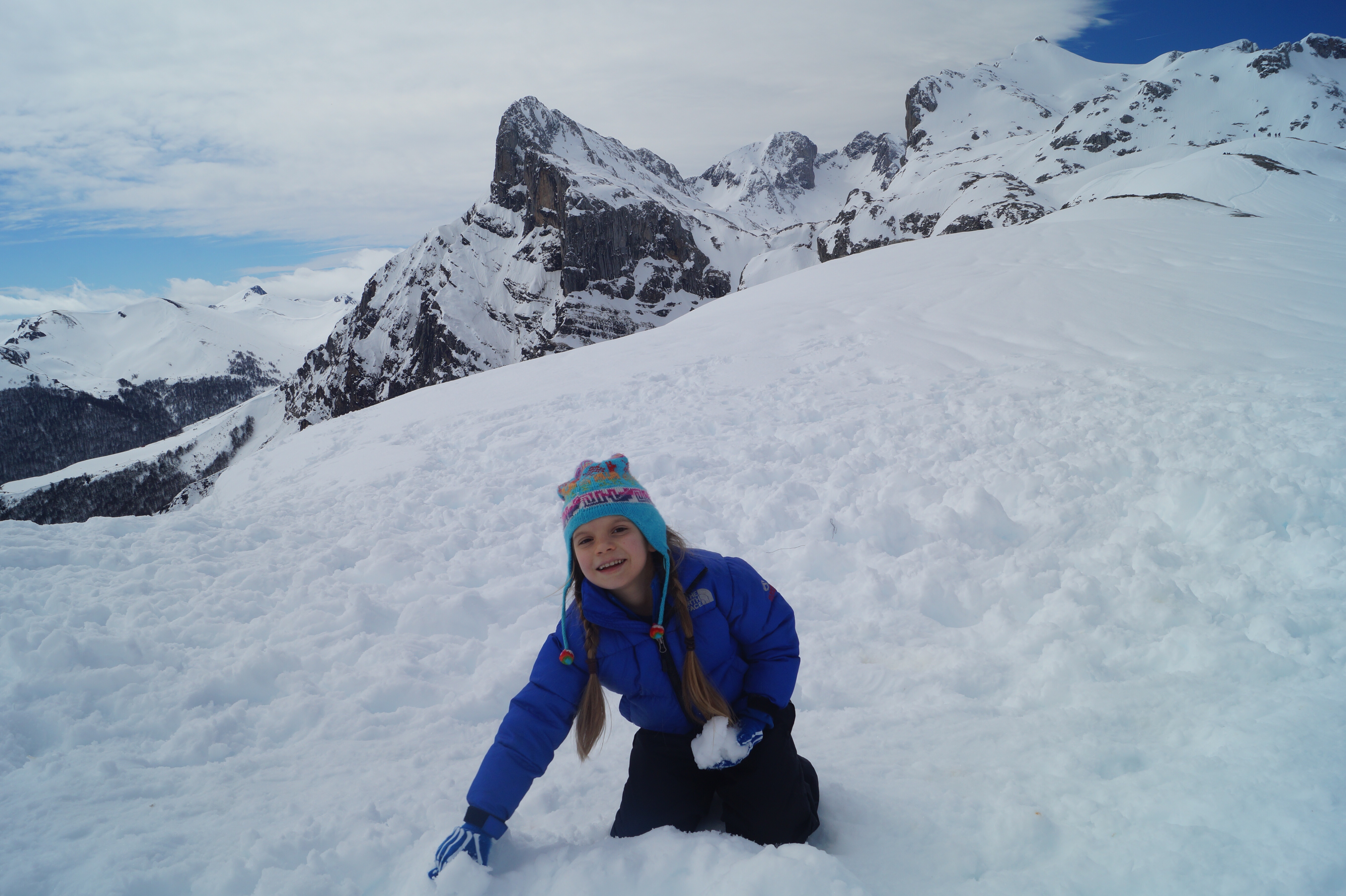
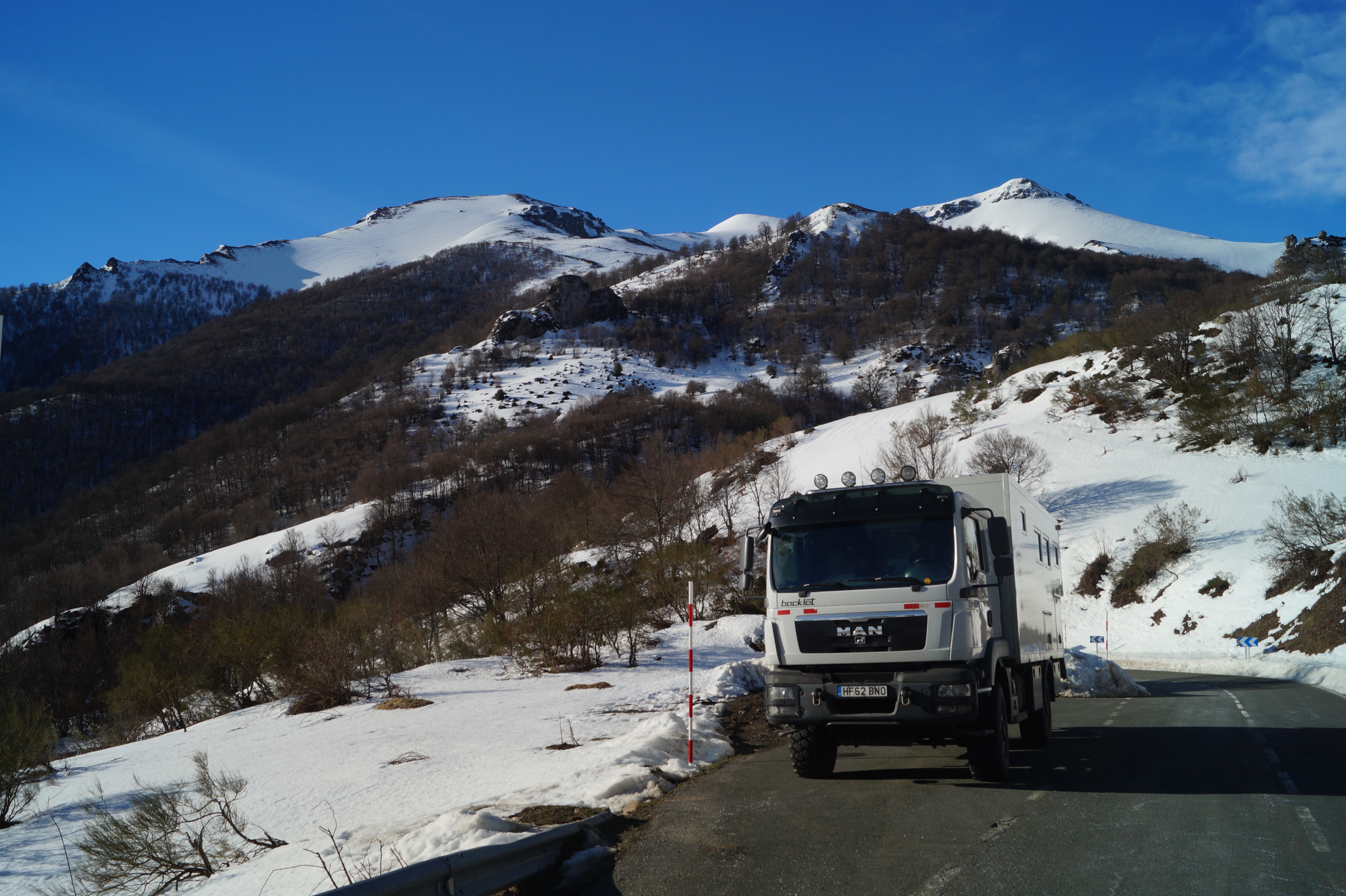
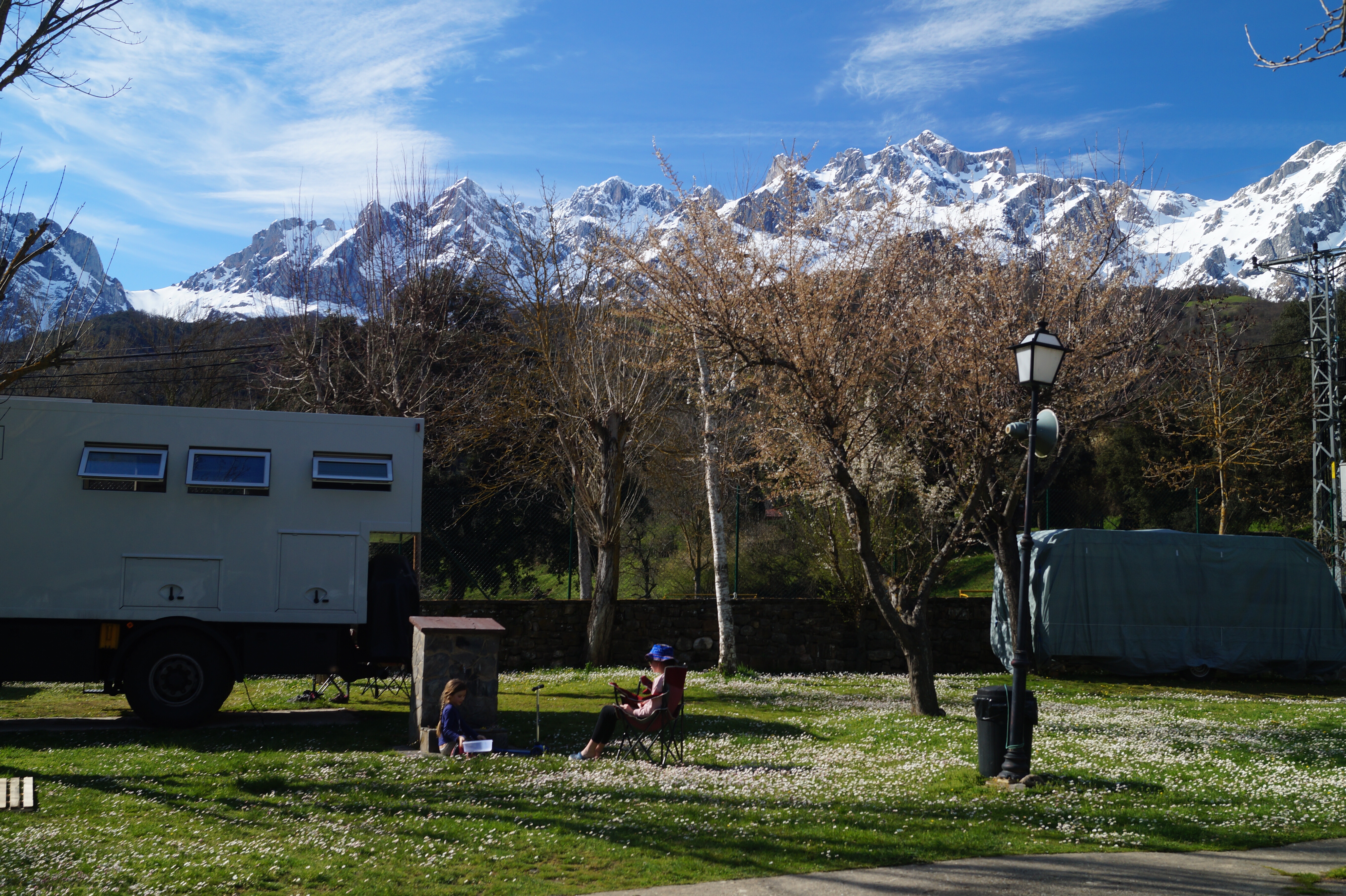 Not having driven the truck much for the last 6 months, Steve didn't particularly enjoy the narrow, winding road that snaked upwards through the tight valley. Night fall had bought in rain and thick cloud, obscuring any view. However the next morning as we made our way upwards toward the pass, we passed through the cloud layer. Above it was a magical place of light, with fluffy while clouds carpeting the valley below up and the peaks blanketed in snow above us.
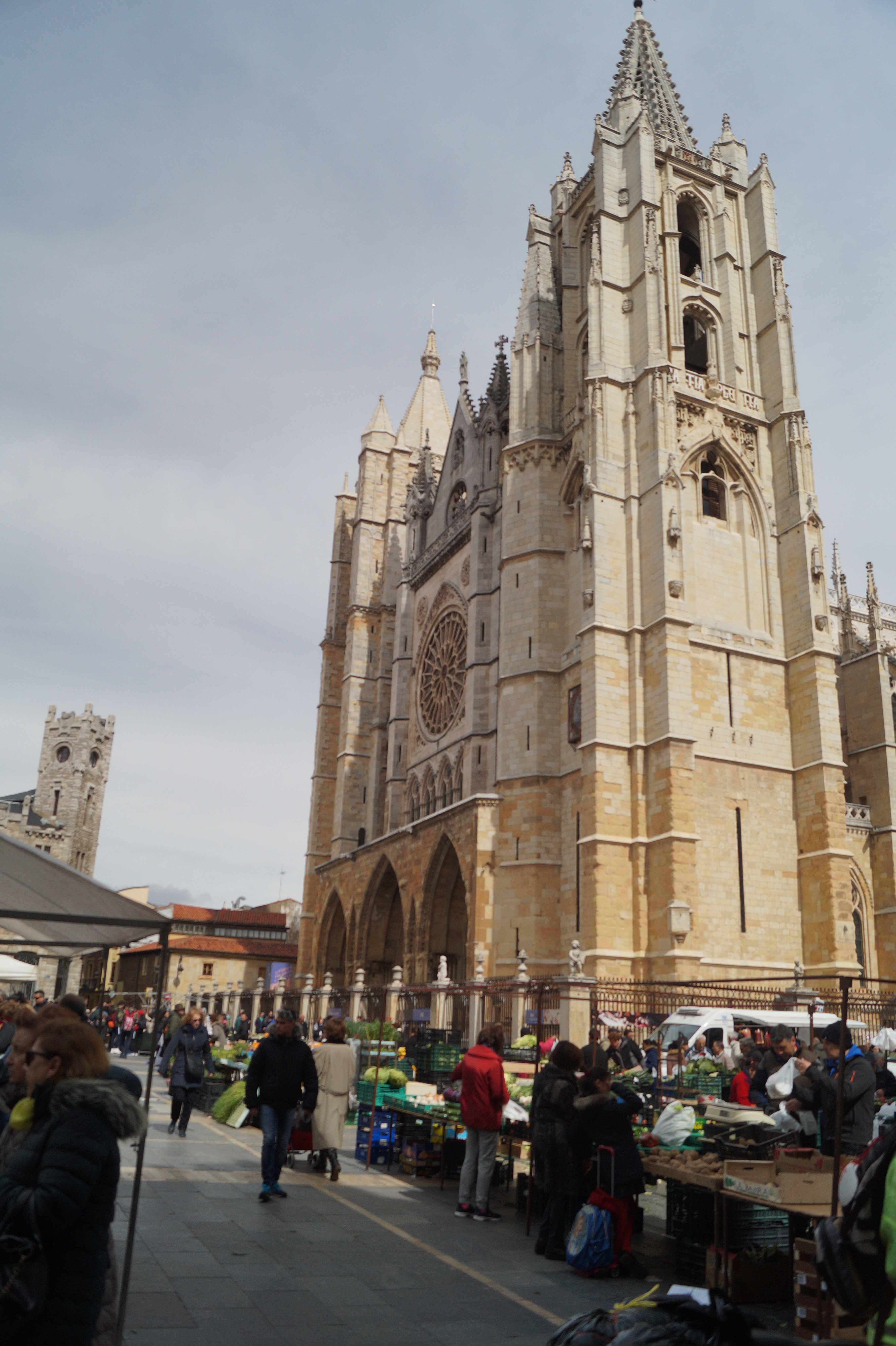
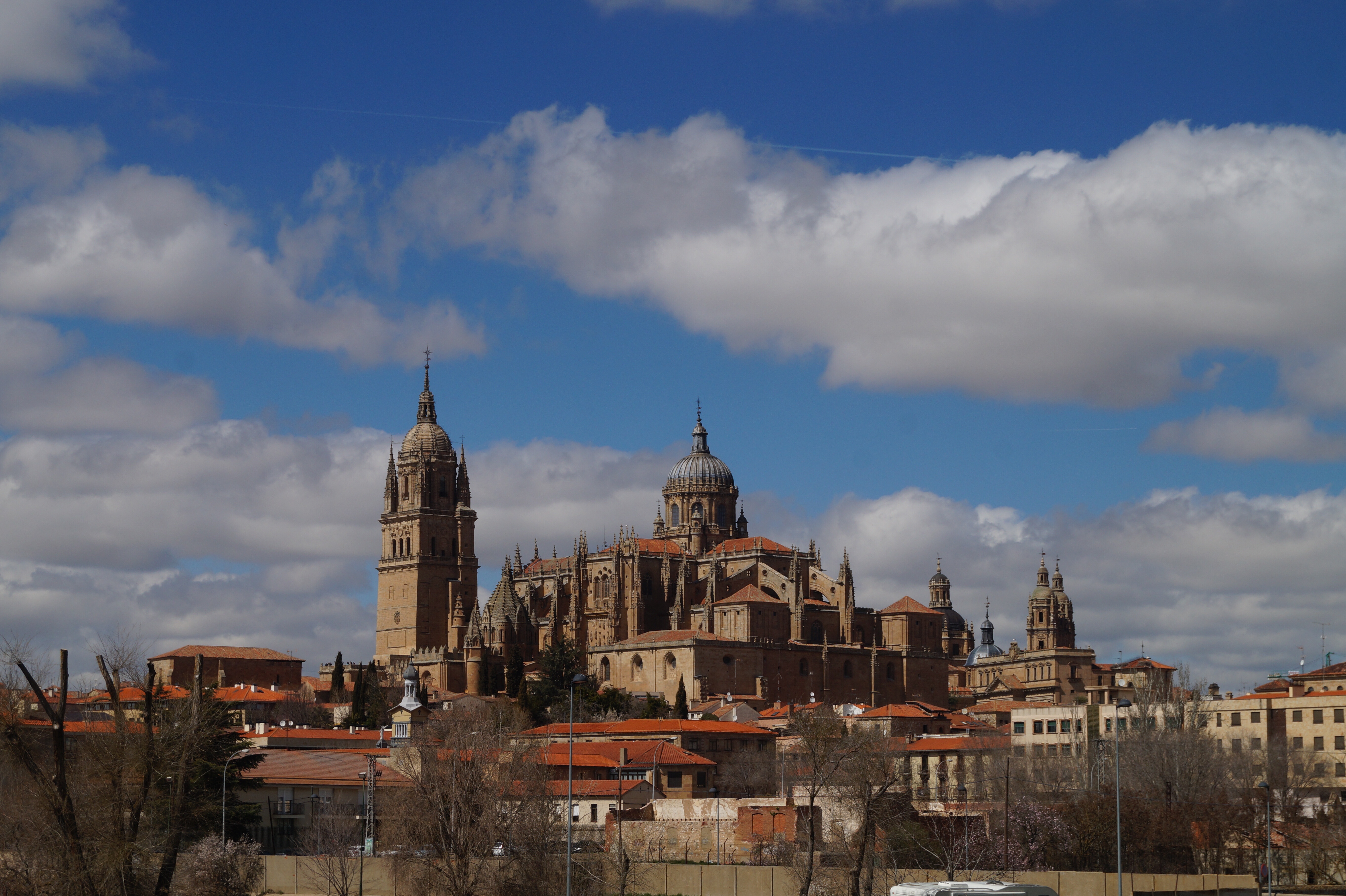
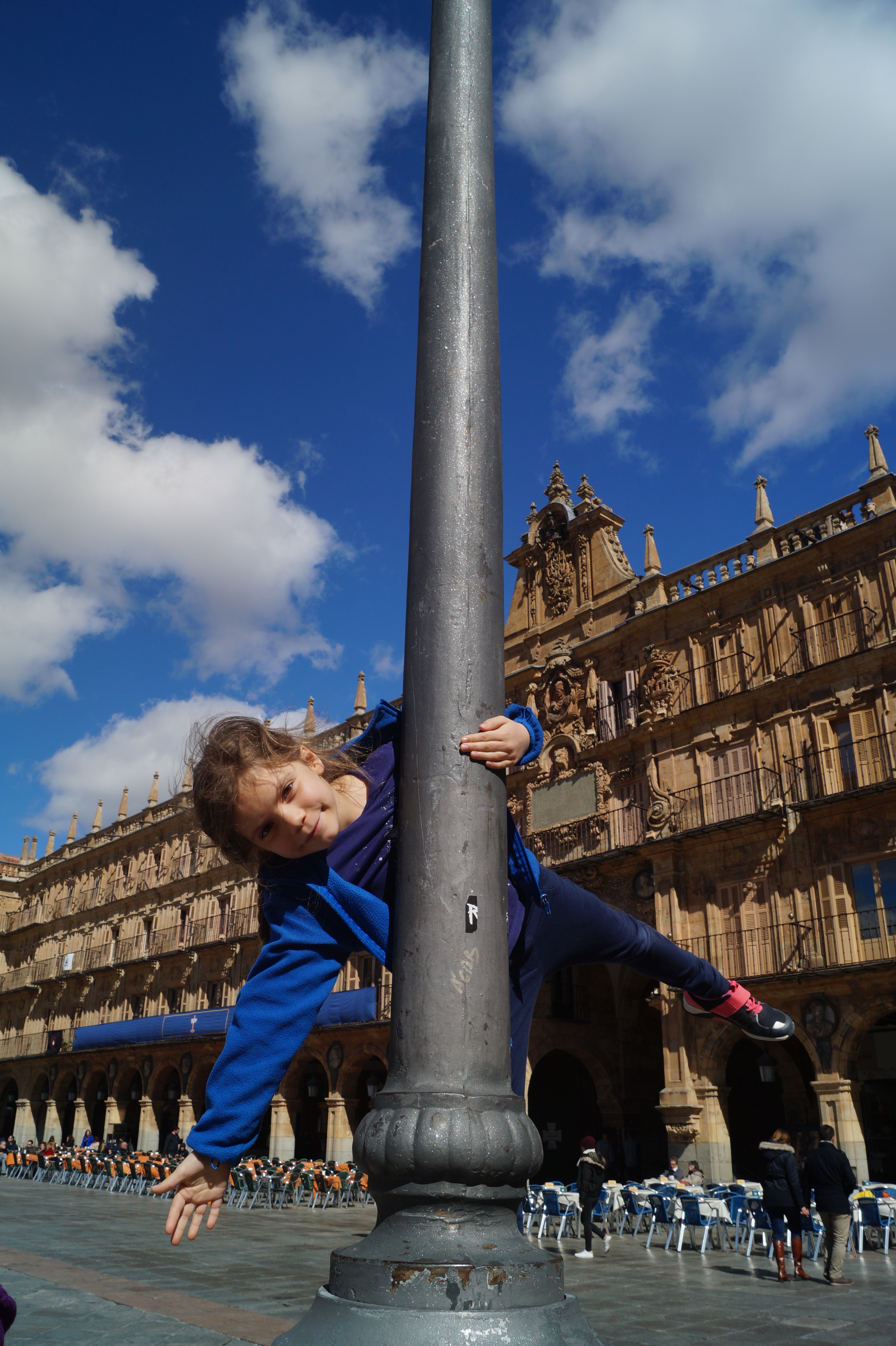
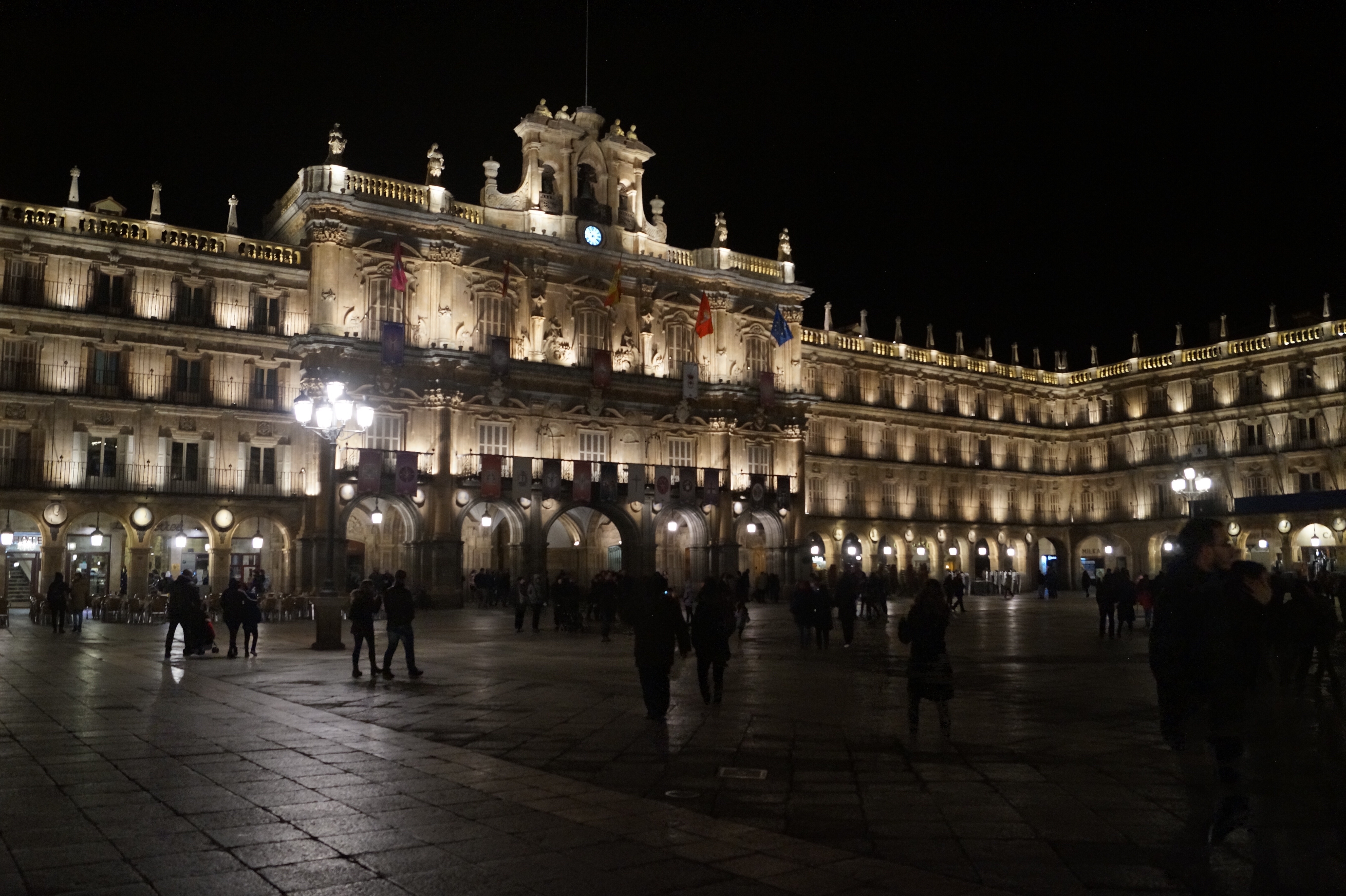
 The historical cities of León and Salamanca are stuffed full of architectural gems from the medieval cathedrals; renaissance churches; and baroque main plazas. It was enough wandering around the cobbled streets marvelling at the beauty above us. The girls kept themselves busy whilst walking by imagining elaborate stories based on their surroundings. Each day we rested our cobble-weary feet by stopping to have a fabulous meal of the different regional specialities.
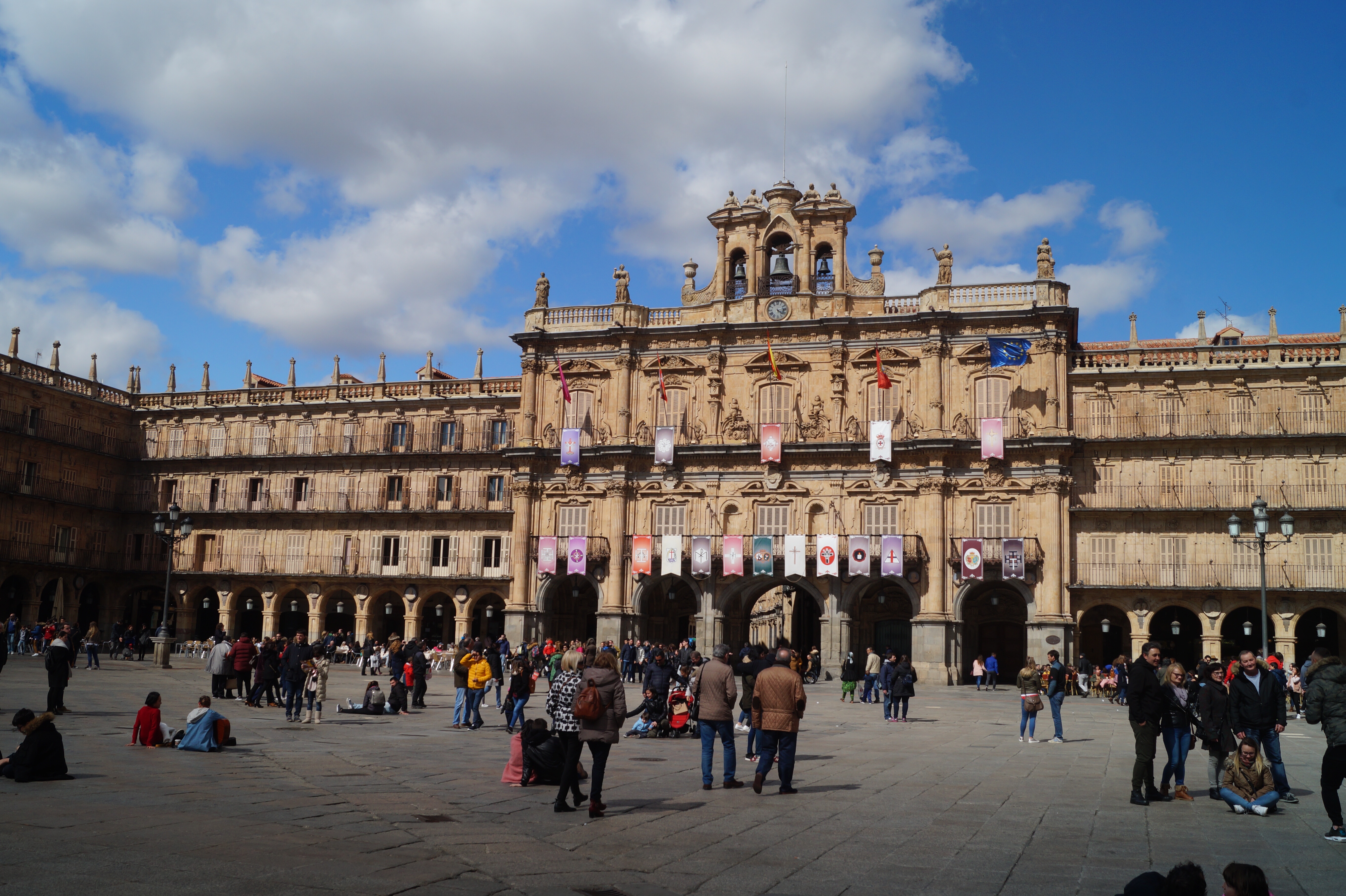
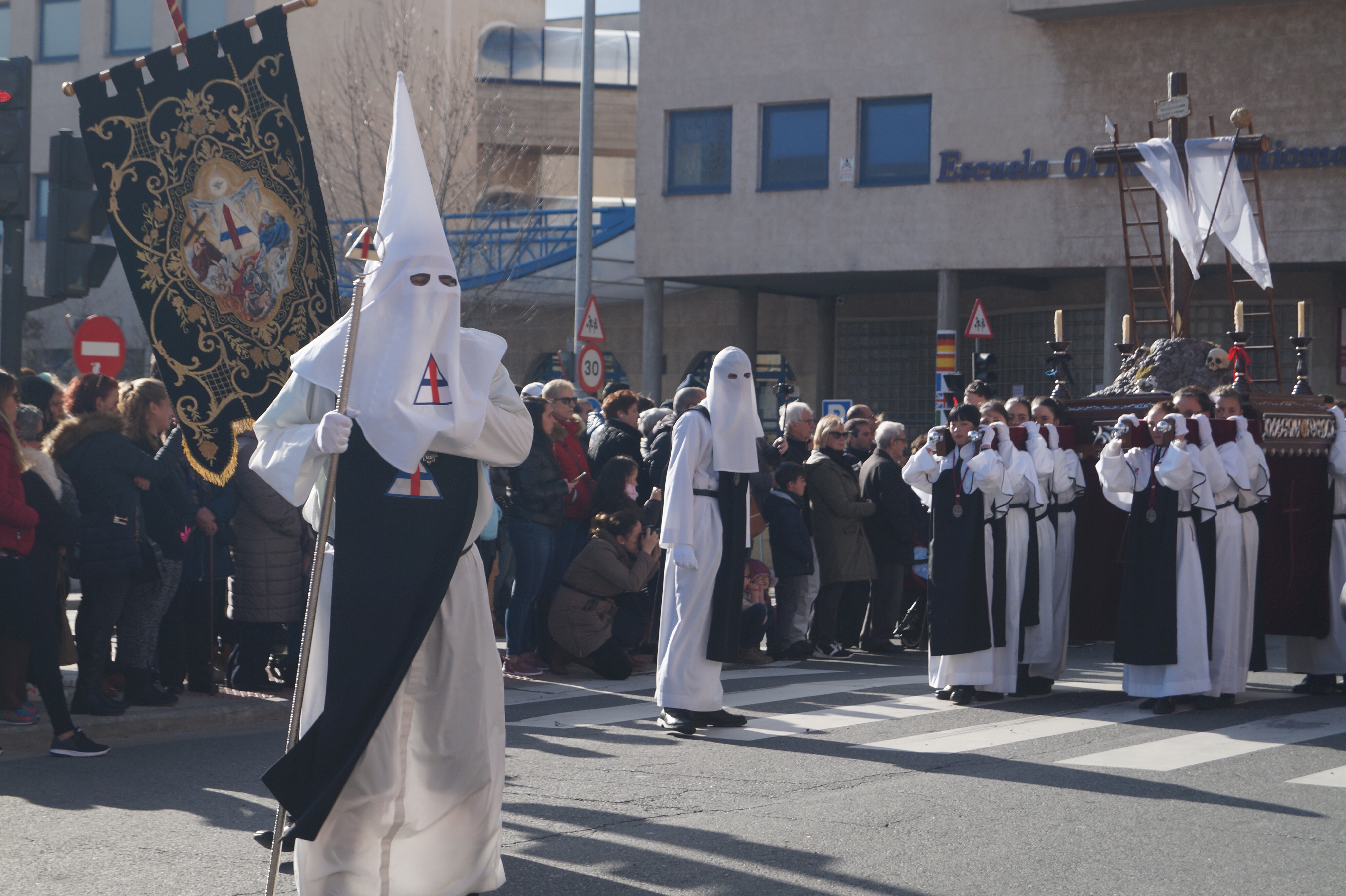
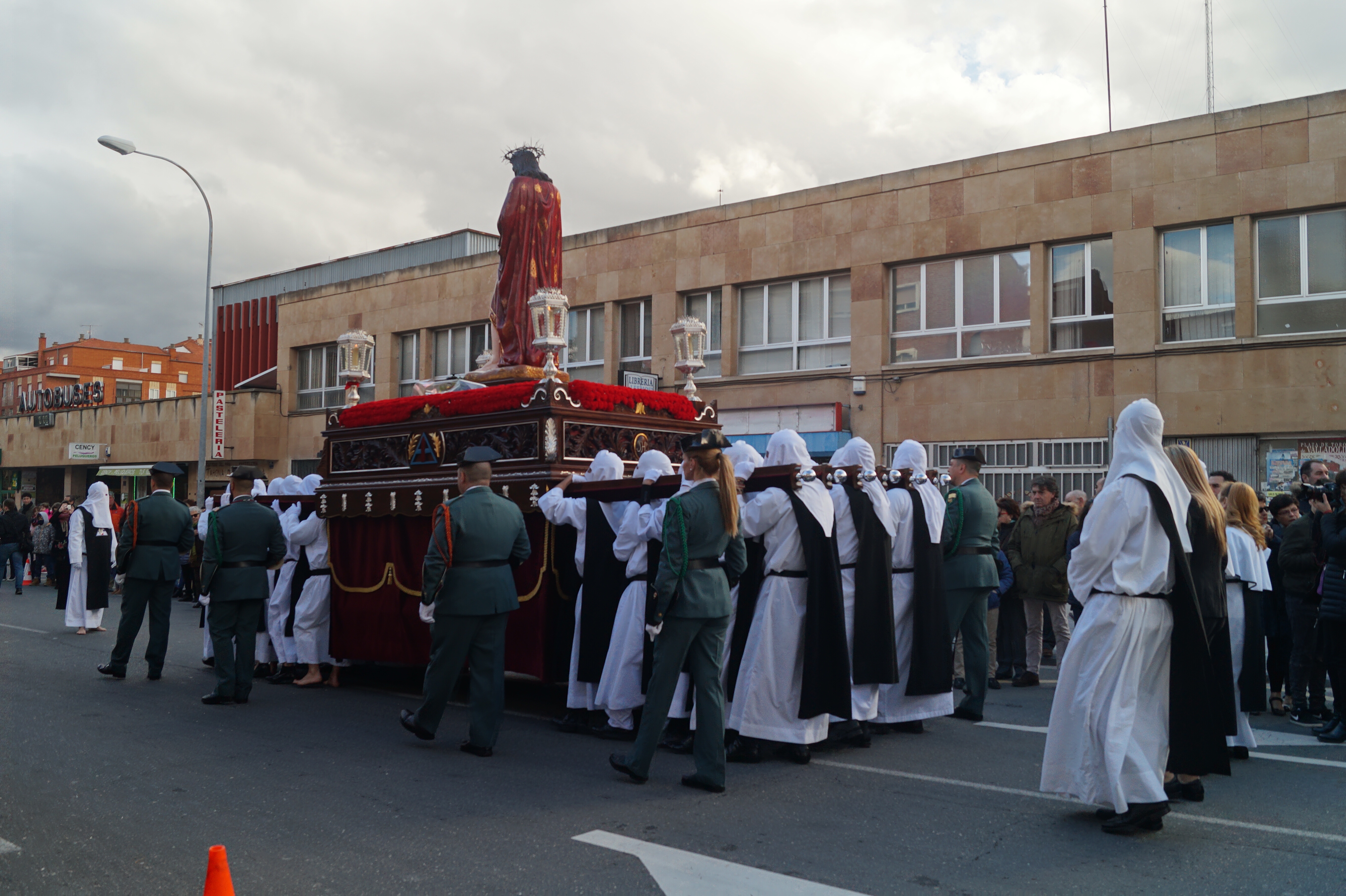
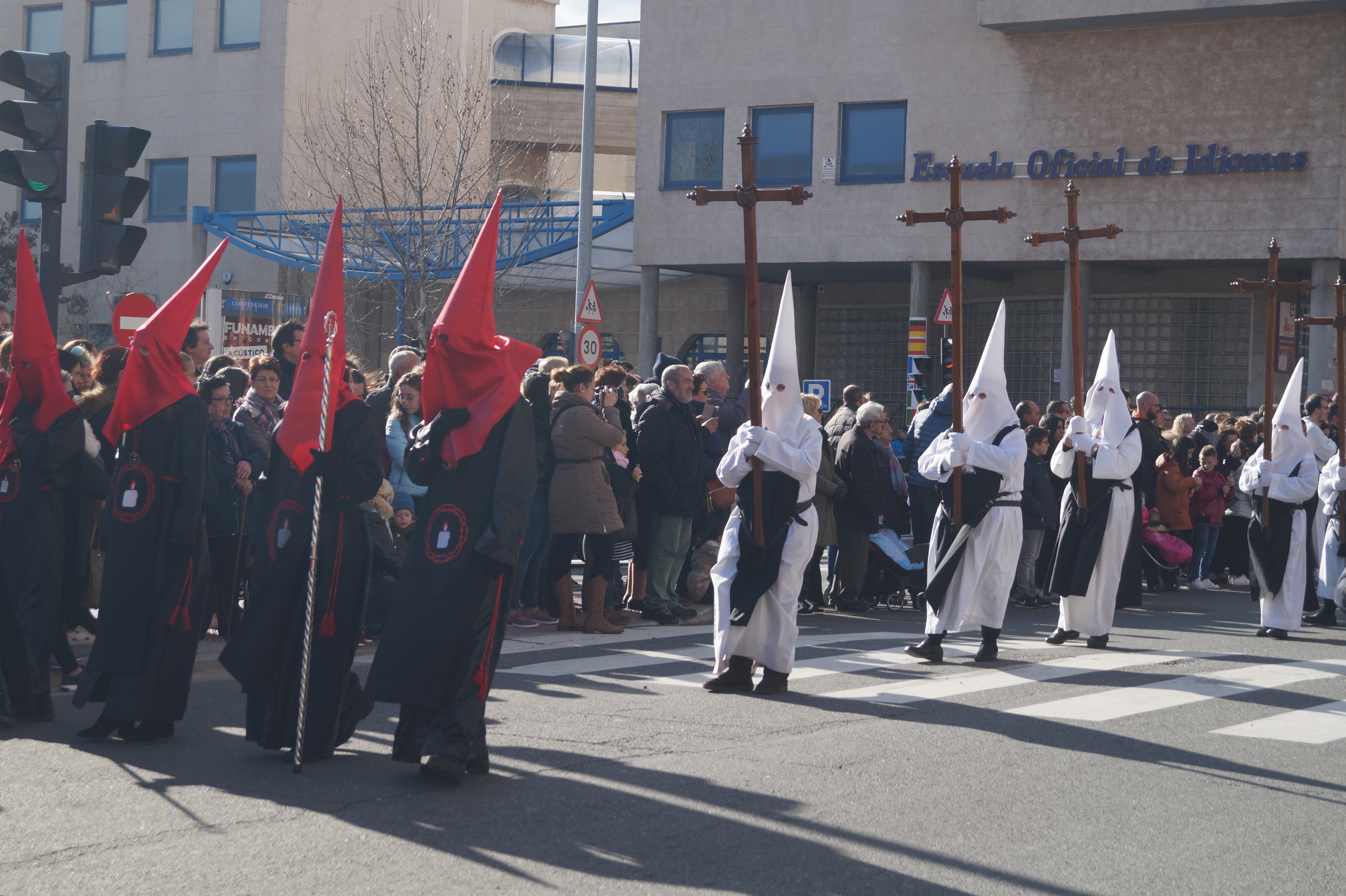
 Many churches in Spain have solemn Santa Semana (Easter) processions where hooded penitents carry heavy statues and crucifixes. We were in Salamanca for Maundy Thursday and managed to watch one of the smaller processions. There was a serious and contemplative mood of both the participants and people lining the street.
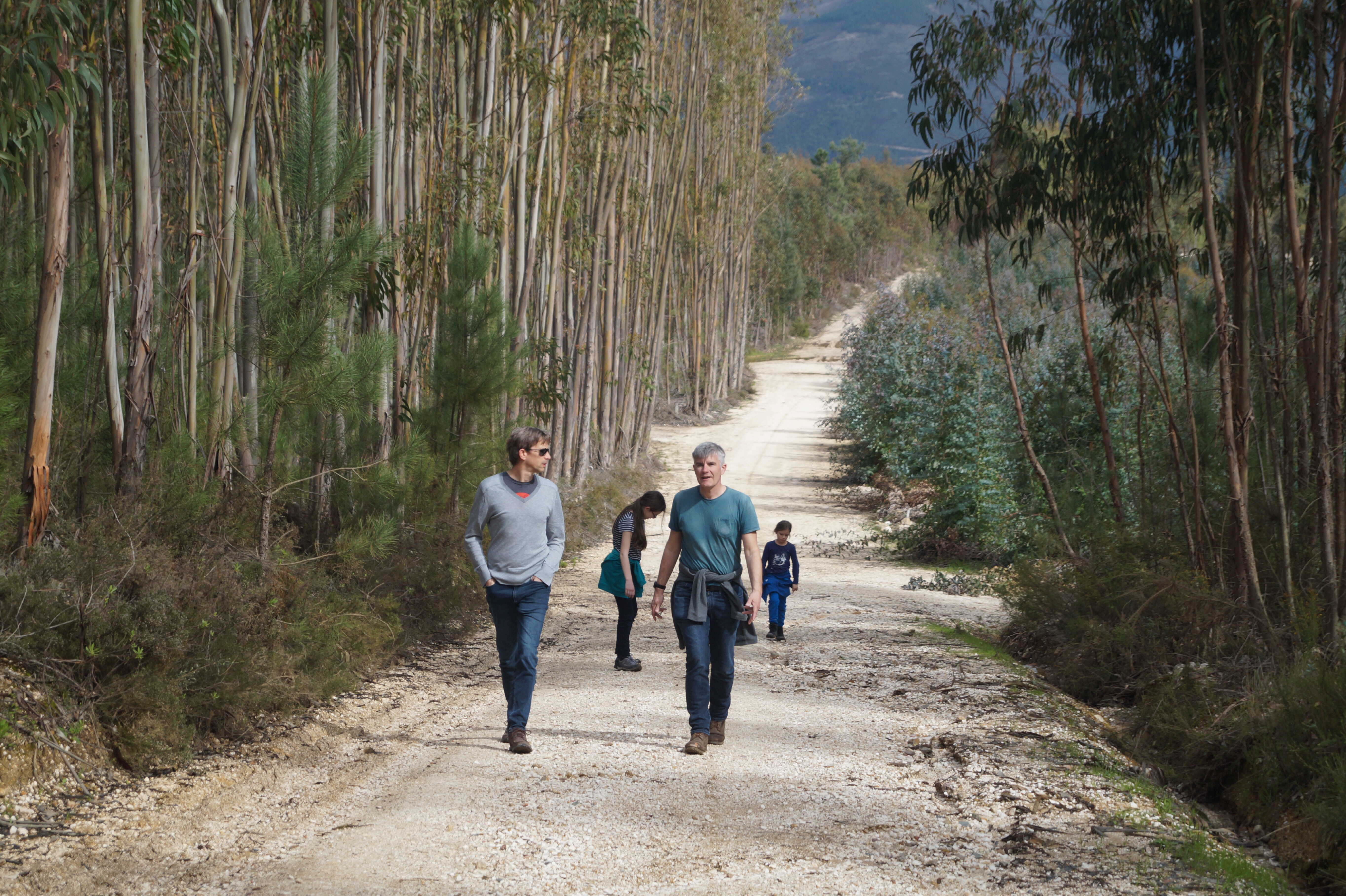
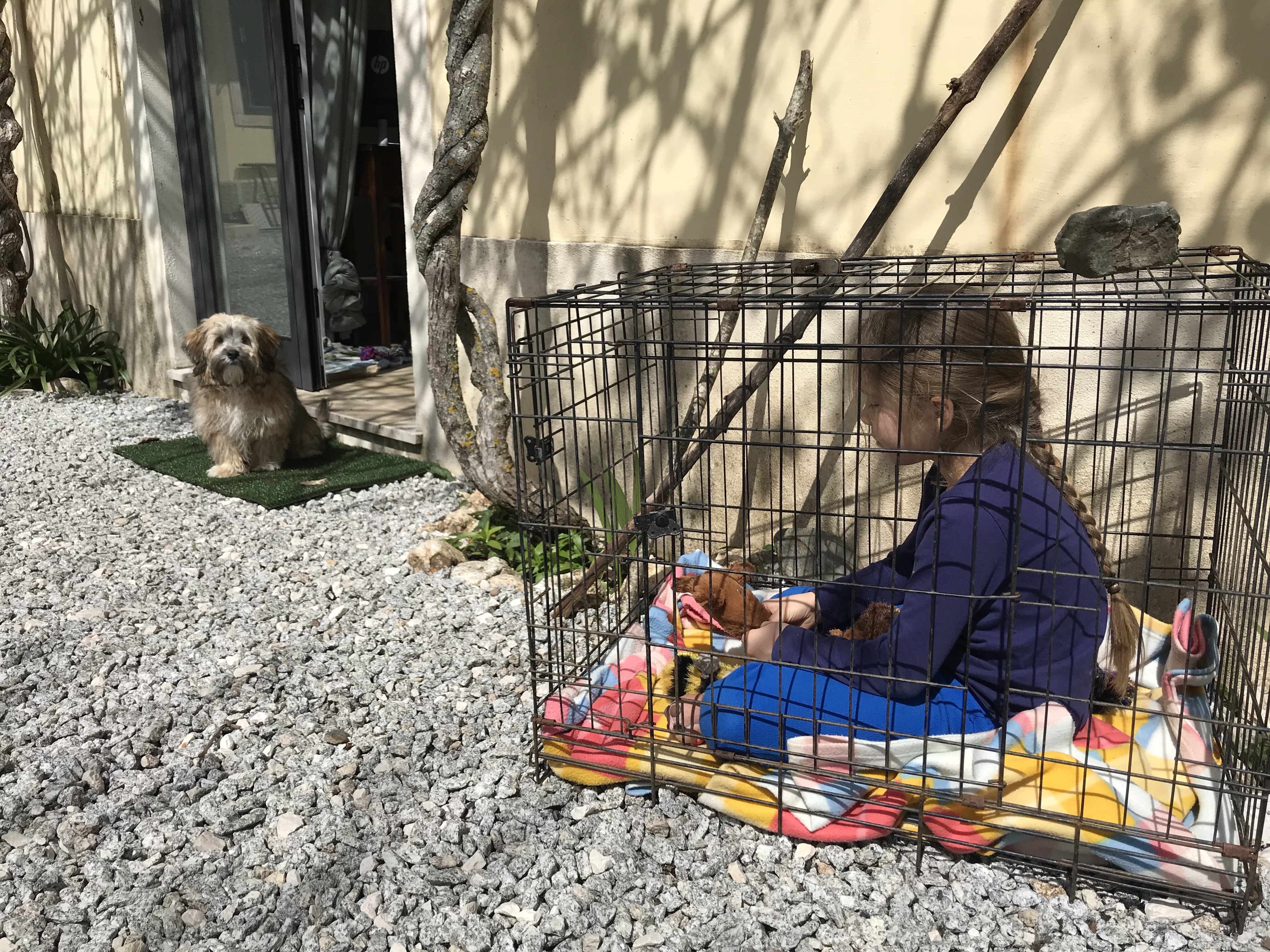
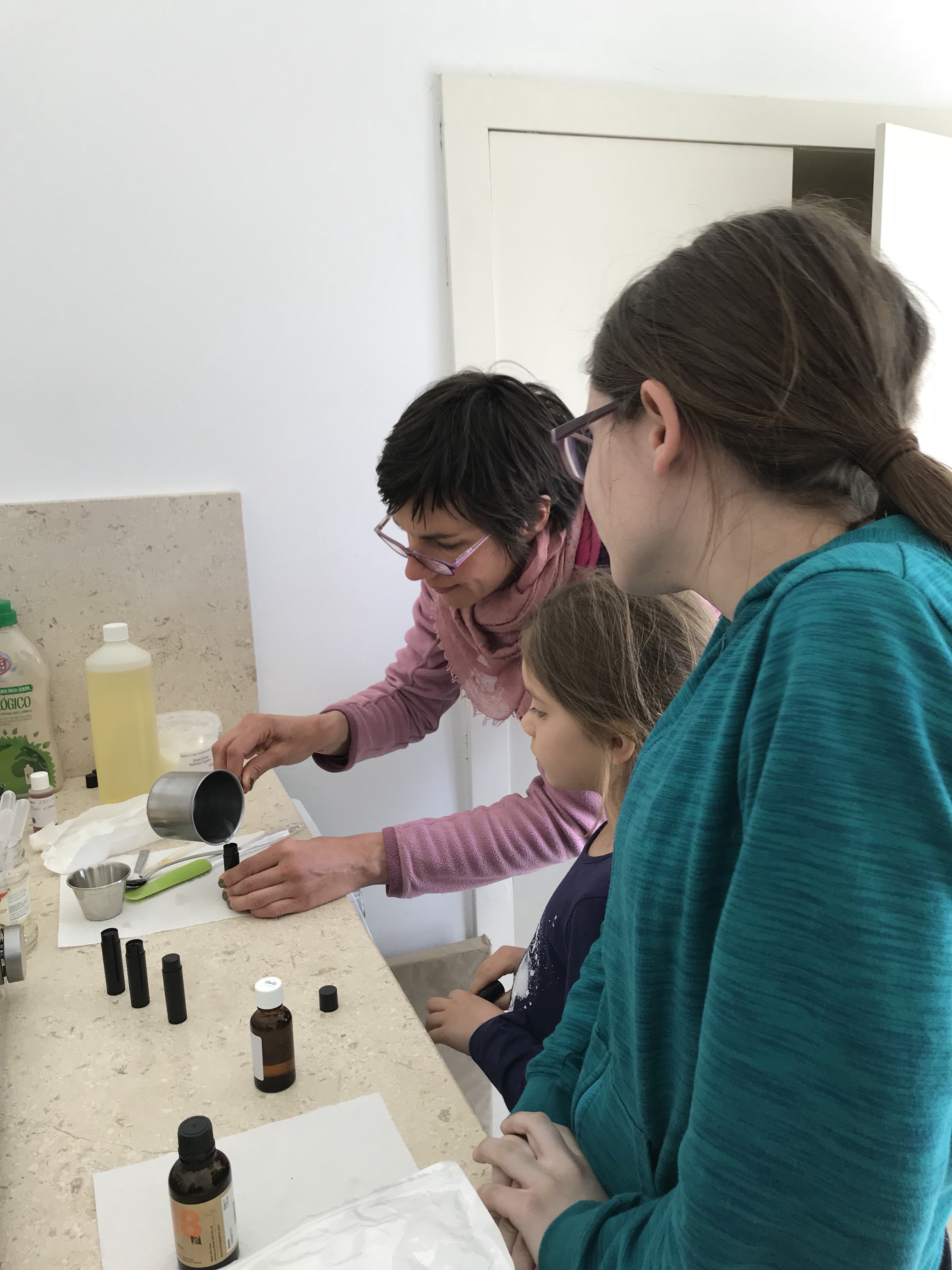
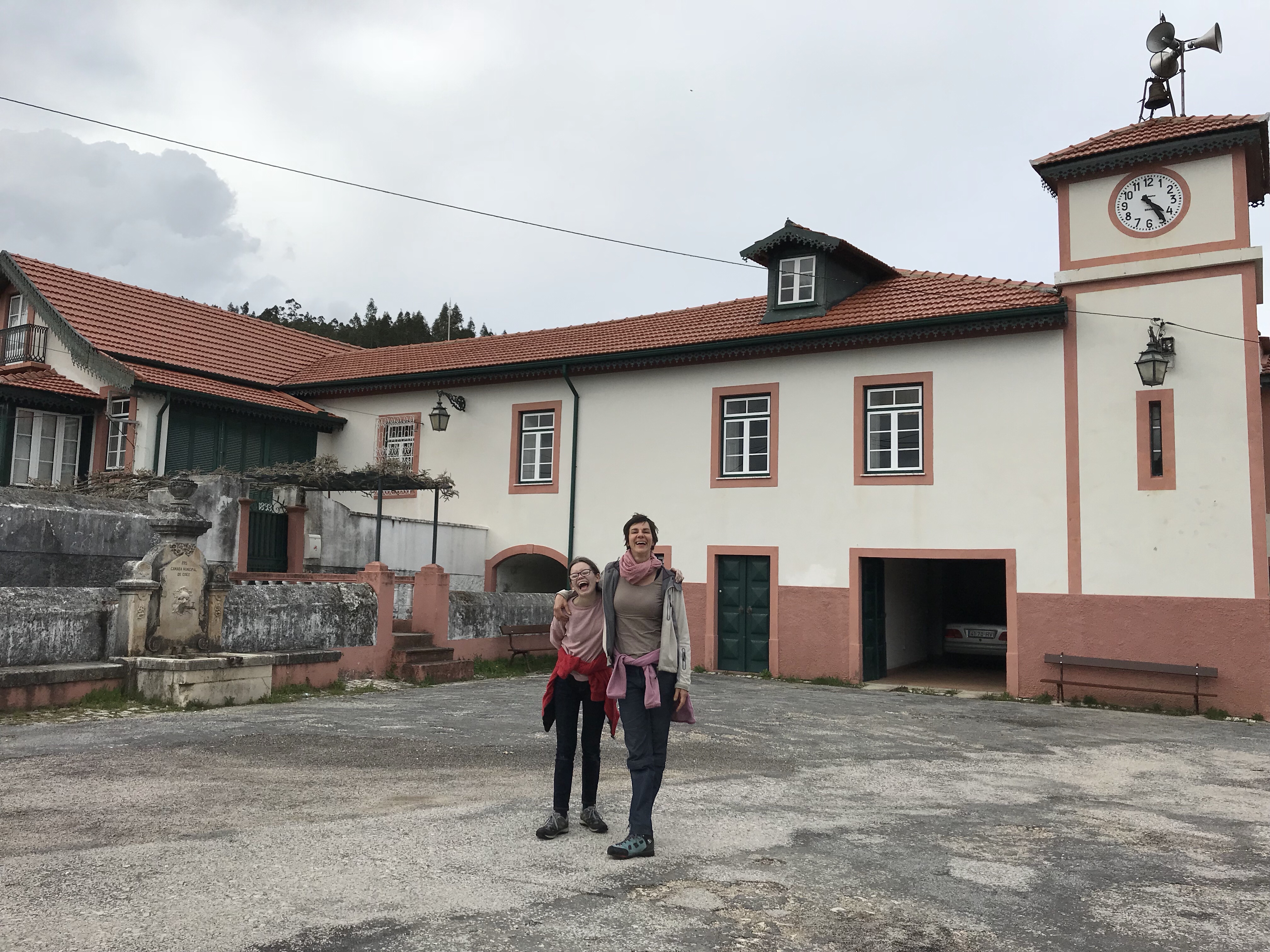
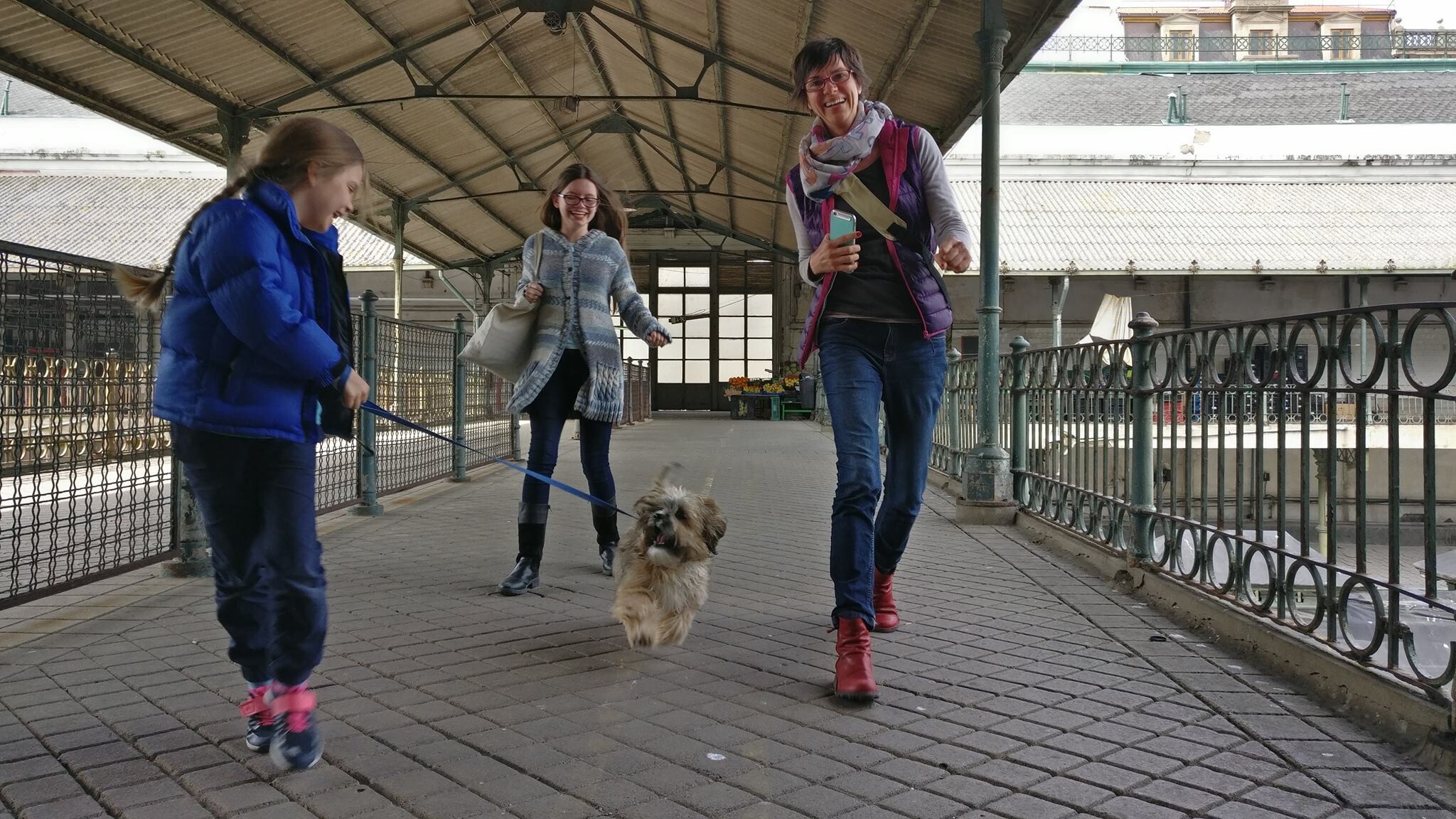
 All through Central and South America, we had regular meet ups with our fellow truck owners John and Betti. Our paths diverged in Uruguay, as we shipped to South Africa and they spent an extra year in South America before tackling the Sahara, but we kept in touch. Now based in Portugal, we wanted to spend some time properly catching up with them. The girls although delighted to see John and Betti, were more excited about hanging out with their puppy Neo. Having lost their dream property purchase and almost everything they owned in the terrible wild fires last autumn, they welcomed us to their rather grand temporary digs. We had a wonderful 5 days: talking; eating Betti's delicious meals; making soap and lip balms; playing with the dog; and going for walks in the beautiful hills between rain showers. Fancying a bit more of an urban experience, they came with us for a couple of days in Porto.
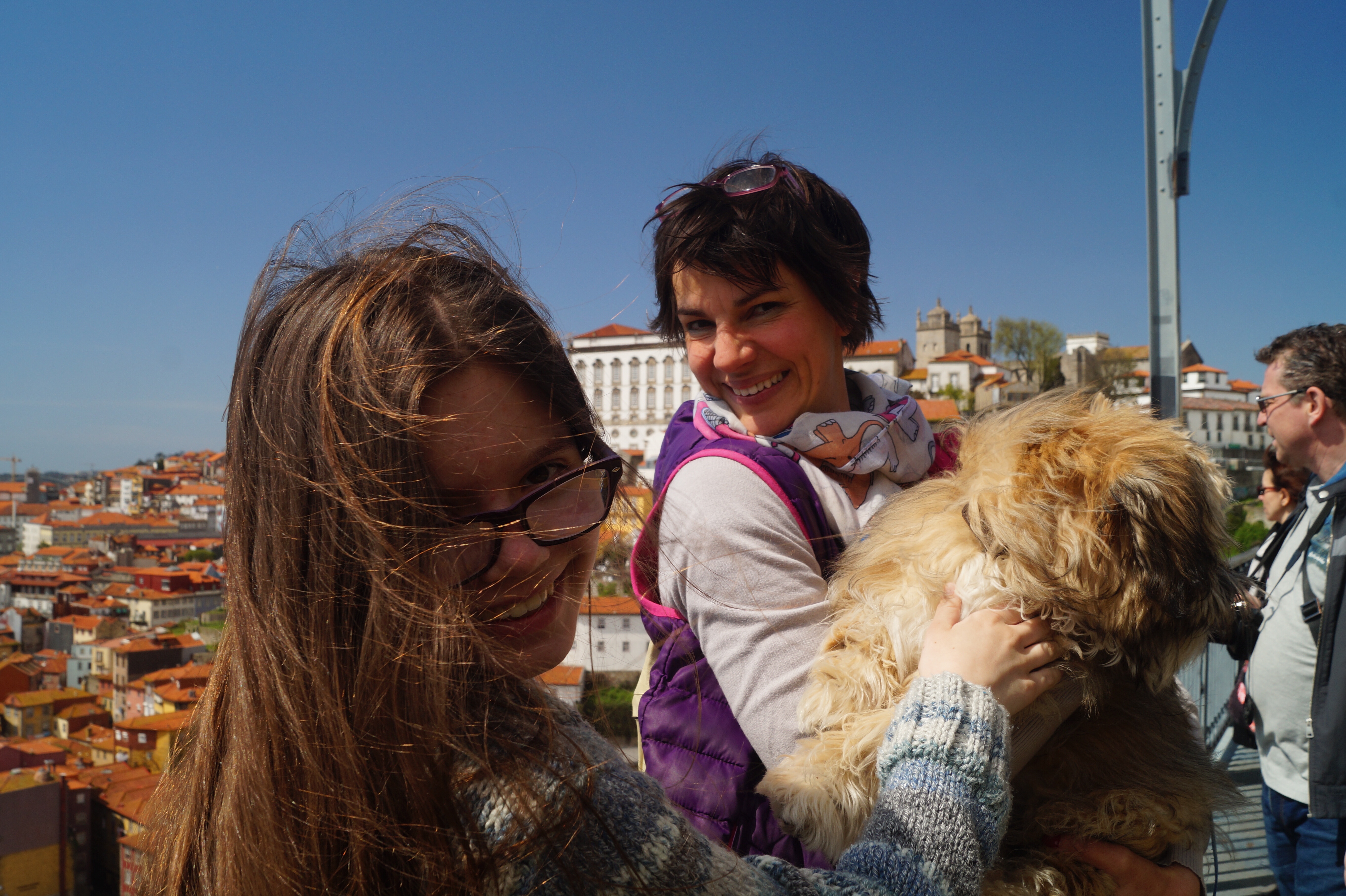
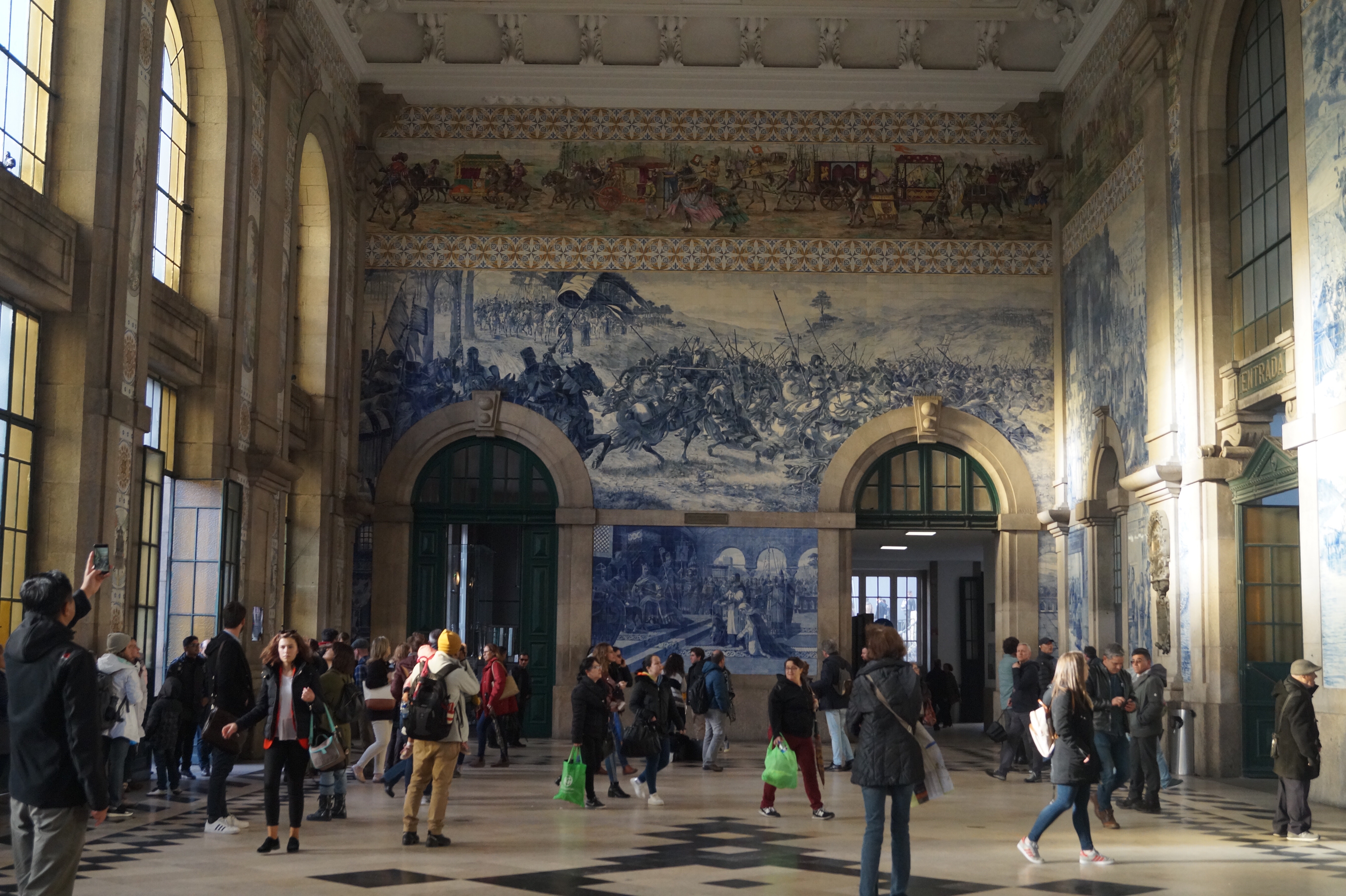
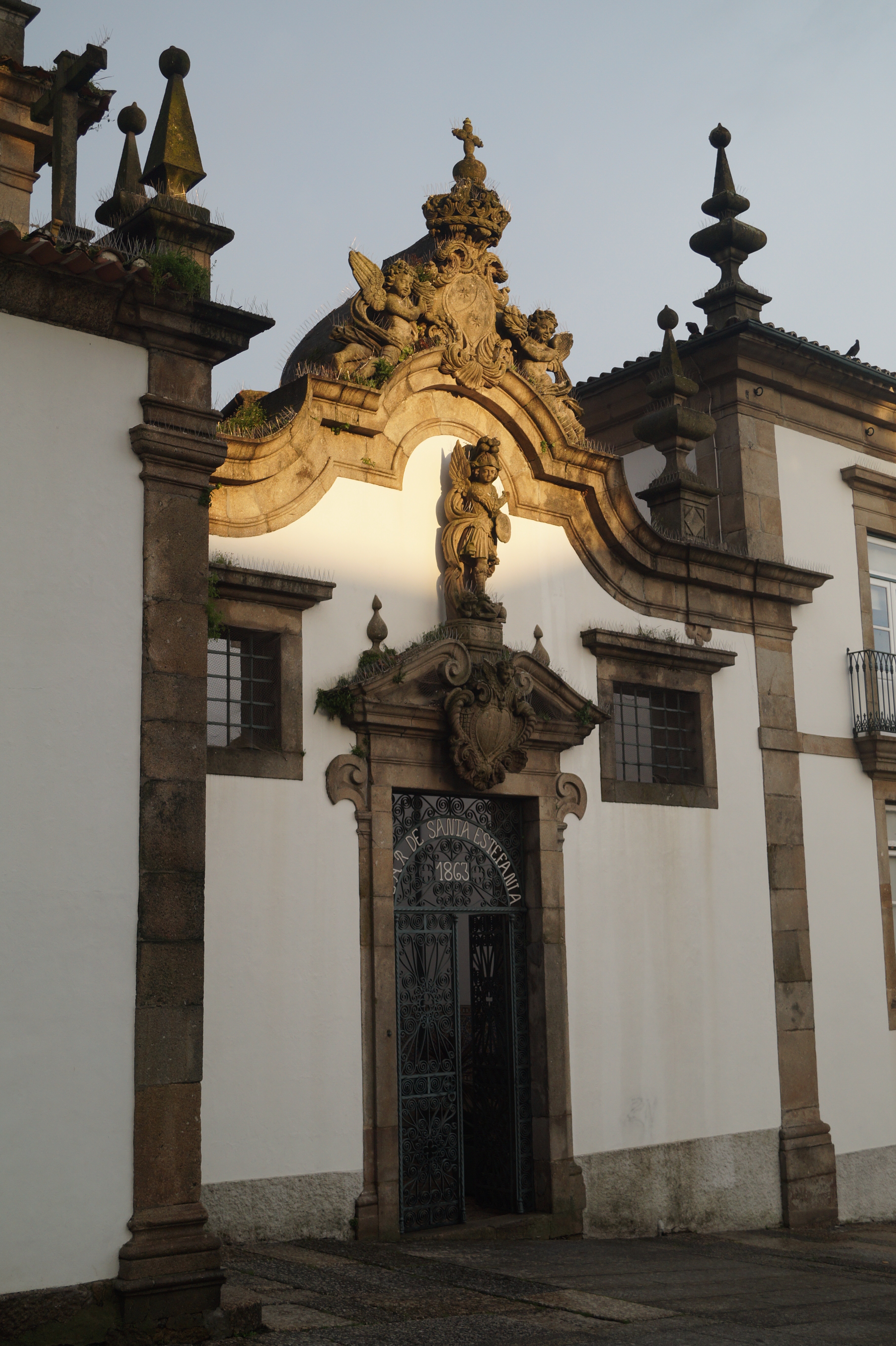
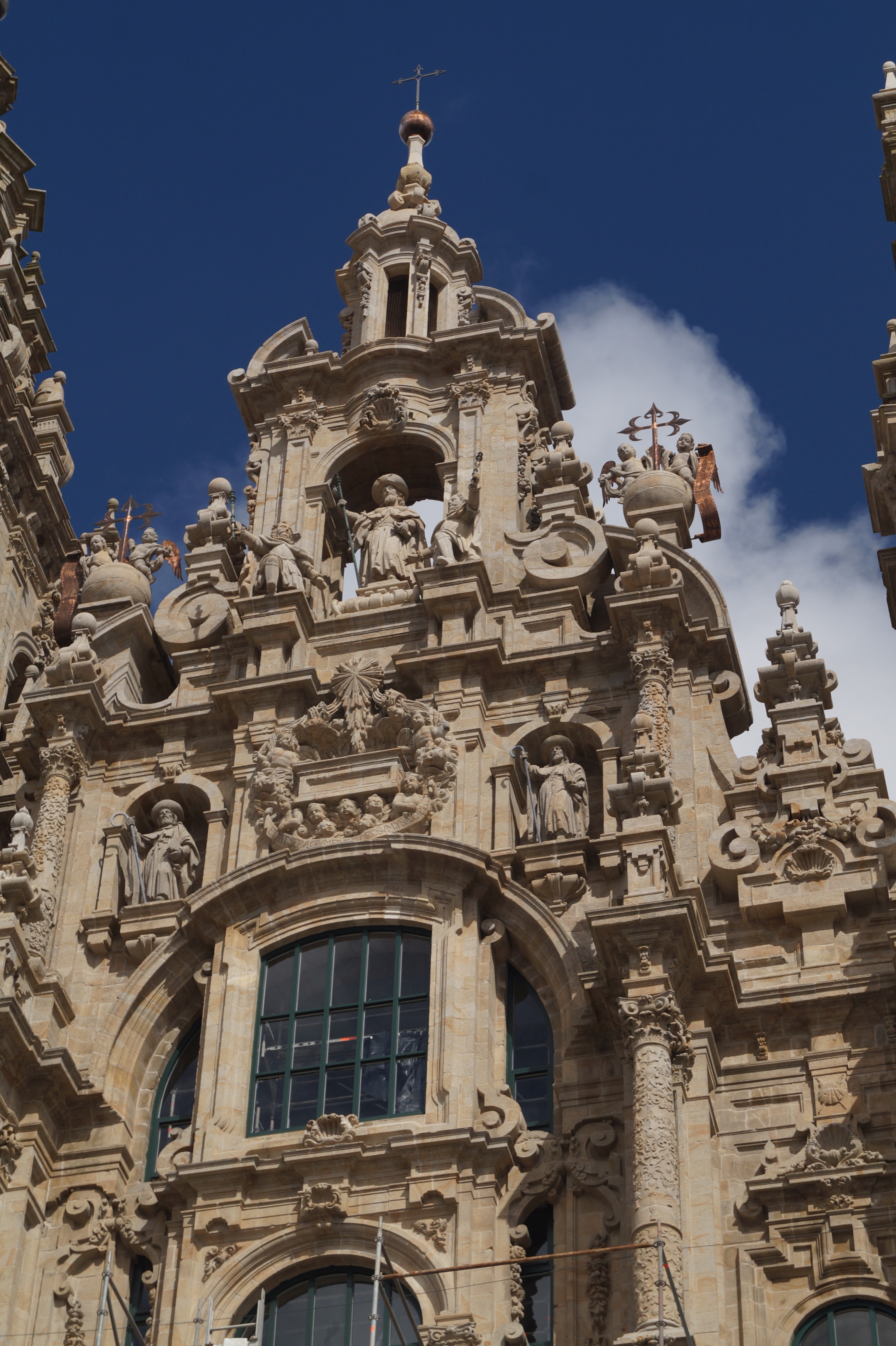
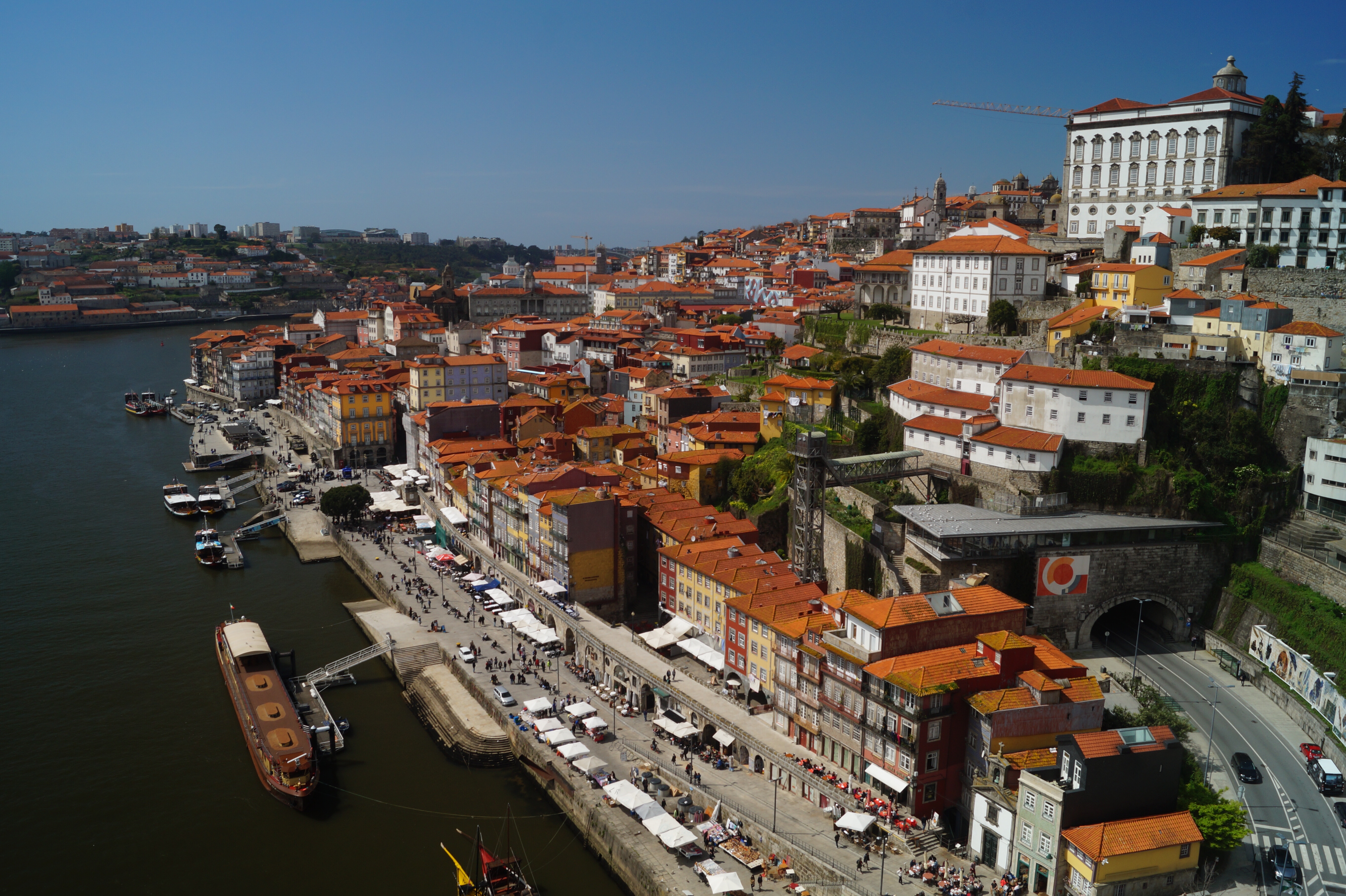 On our 4 years on the road, whenever we went to cities we had to get very creative about where to park the truck to sleep - police stations, fire stations, car parks, petrol stations or even just on the road having asked a friendly shop owner. So Spain and Portugal came as a pleasant surprise, with many towns having a designated overnight parking place for motor homes. You couldn't do anything that looked like camping: chairs and washing lines etc. and there was sometimes a small fee but the locations were fantastic. Which meant an easy stroll home from the port tasting warehouse area along the river.Throughout Spain and Portugal we've been impressed by the sight of raincoat clad walkers making their way along the various routes of the Camino de Santiago walking hundreds of kilometres towards the cathedral in Santiago de Compostela. Apart from the odd pilgrim the old town was shuttered and closed in the rainy afternoon but as the sun shone through the clouds and shops reopened after the siesta time, people came out of nowhere to stroll through the cobbled streets. I have to be honest grand gold-clad cathedrals do nothing for my faith, I prefer to talk to God in nature or simple buildings, but you can't help be impressed by the artistry of these centuries old places of worship.
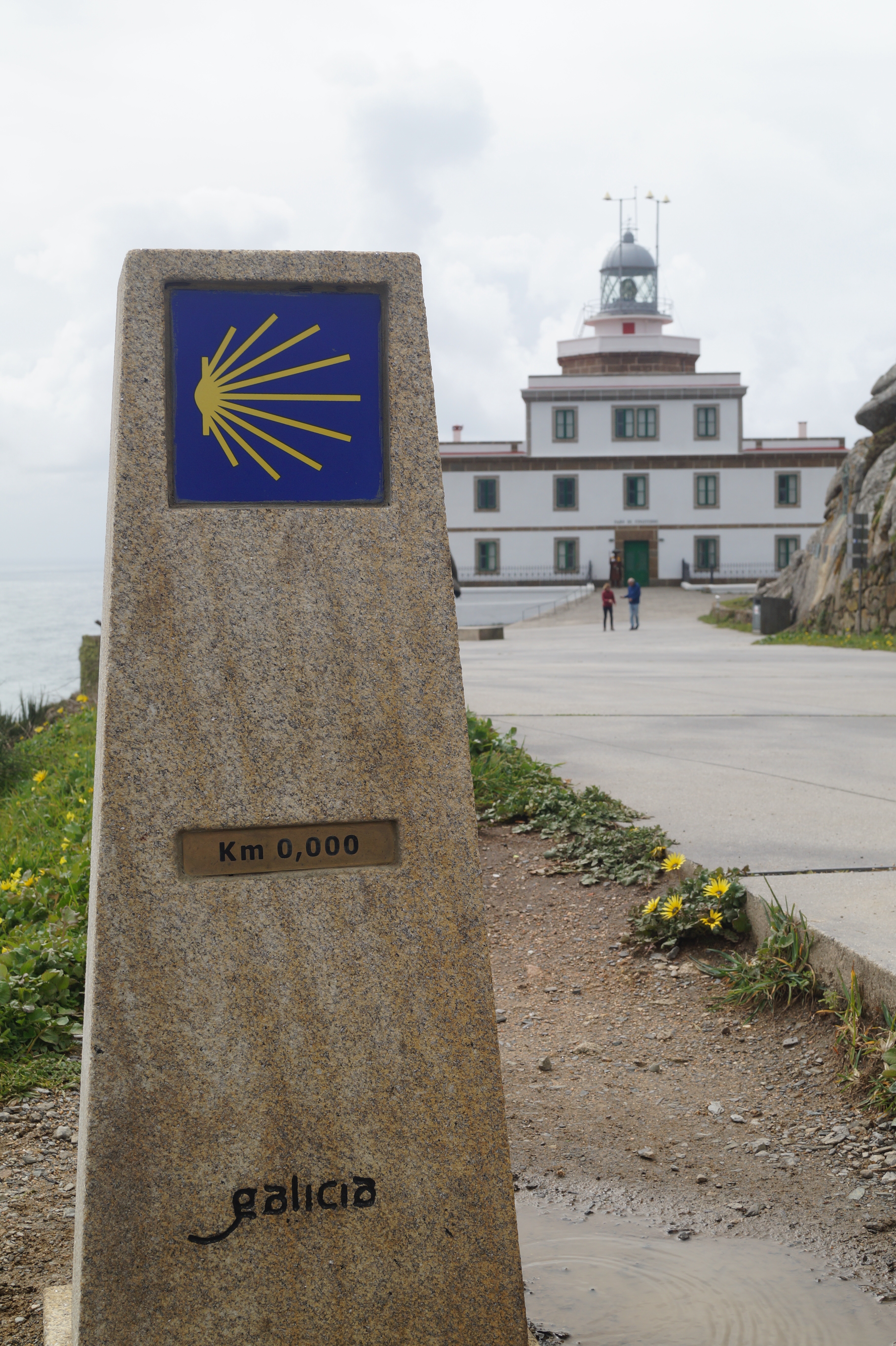
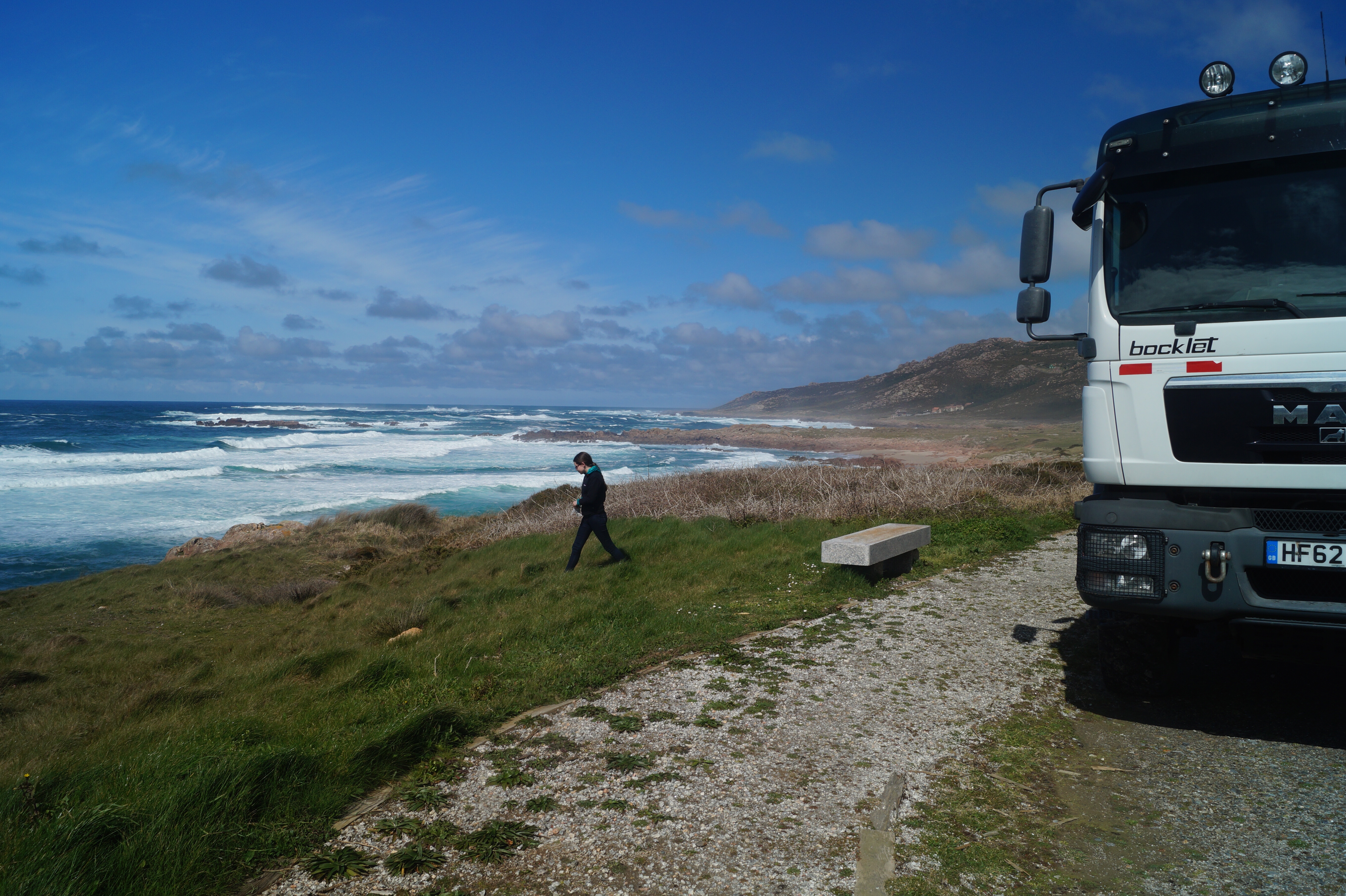
 The lighthouse on the wind blown cliff top at Fisterra is now seen by many pilgrims to be the end point of the Camino. The scrub covered outcrop certainly seems like the end of the continent with the Atlantic stretching away to the horizon. In our cliff top night spot, we were protected from the gusts by tucking beside a rocky outcrop.
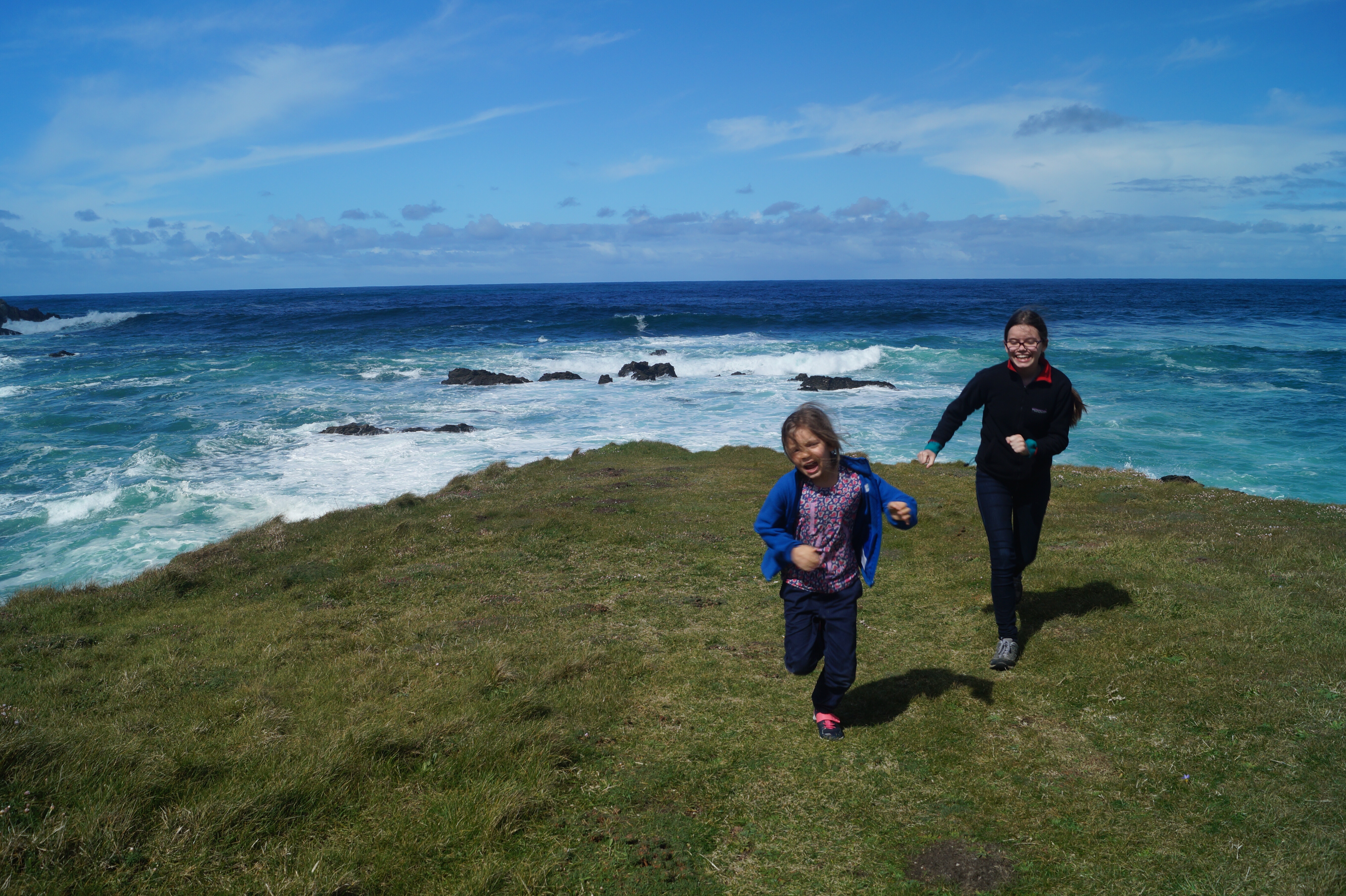
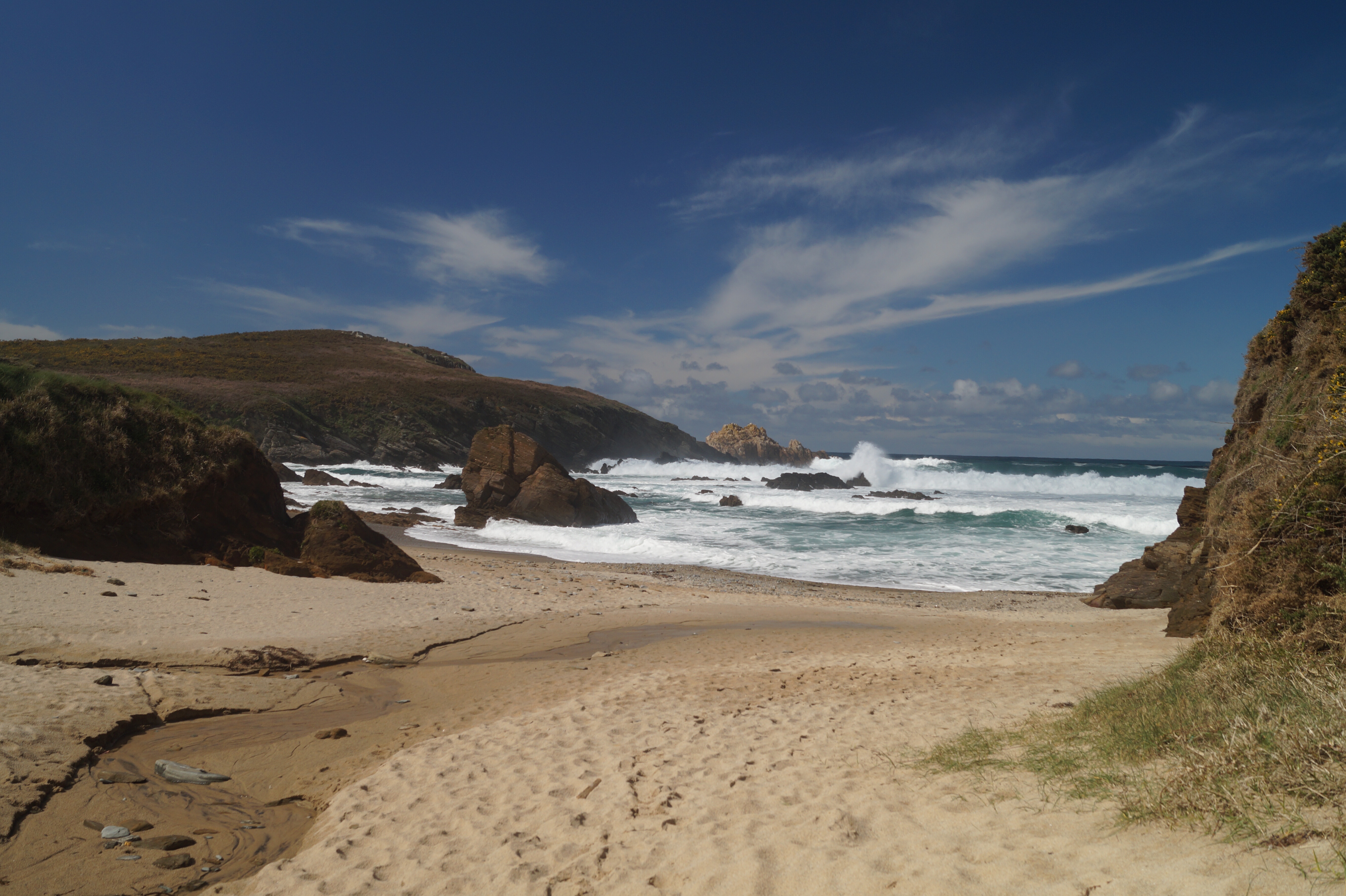
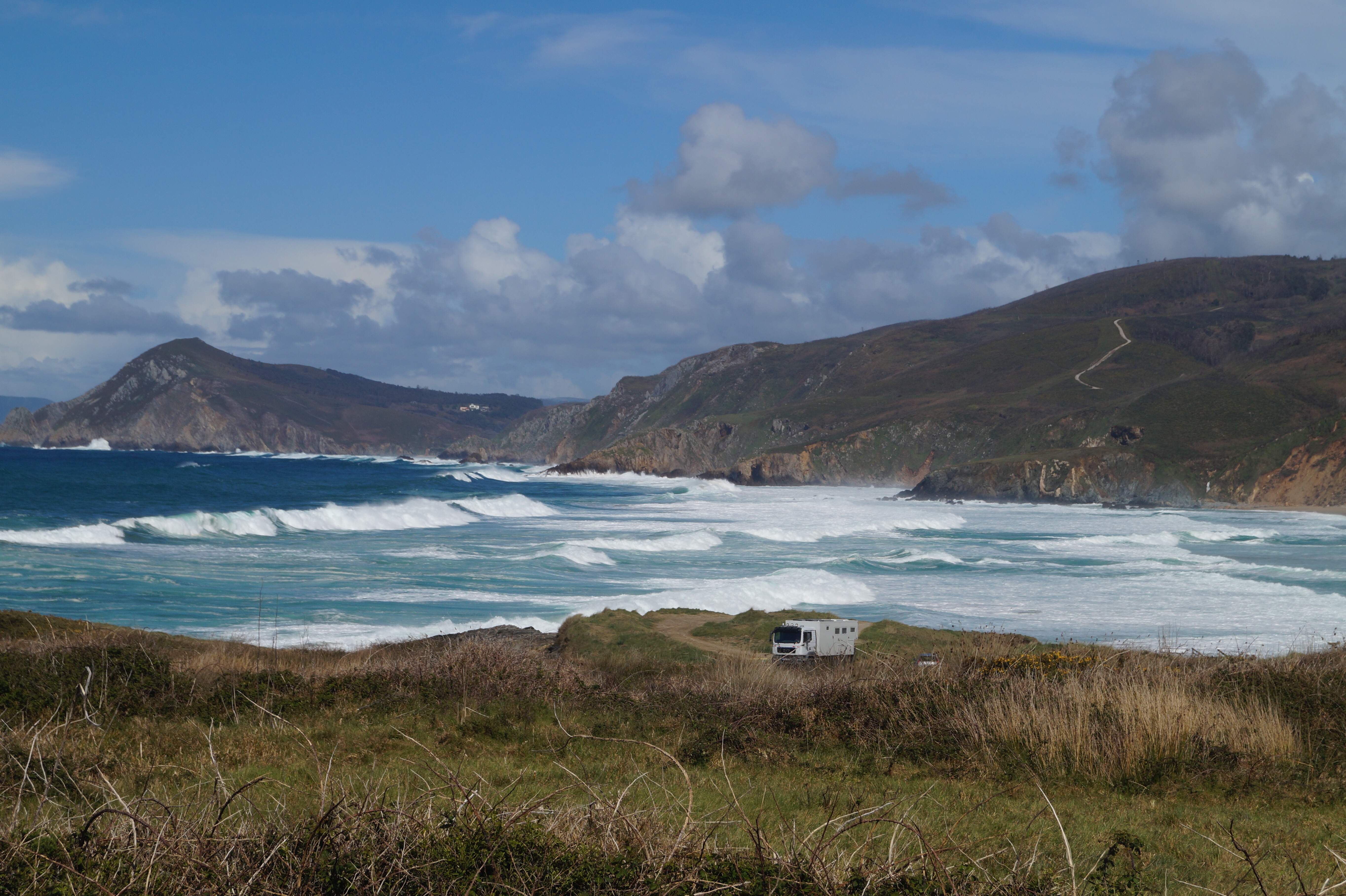
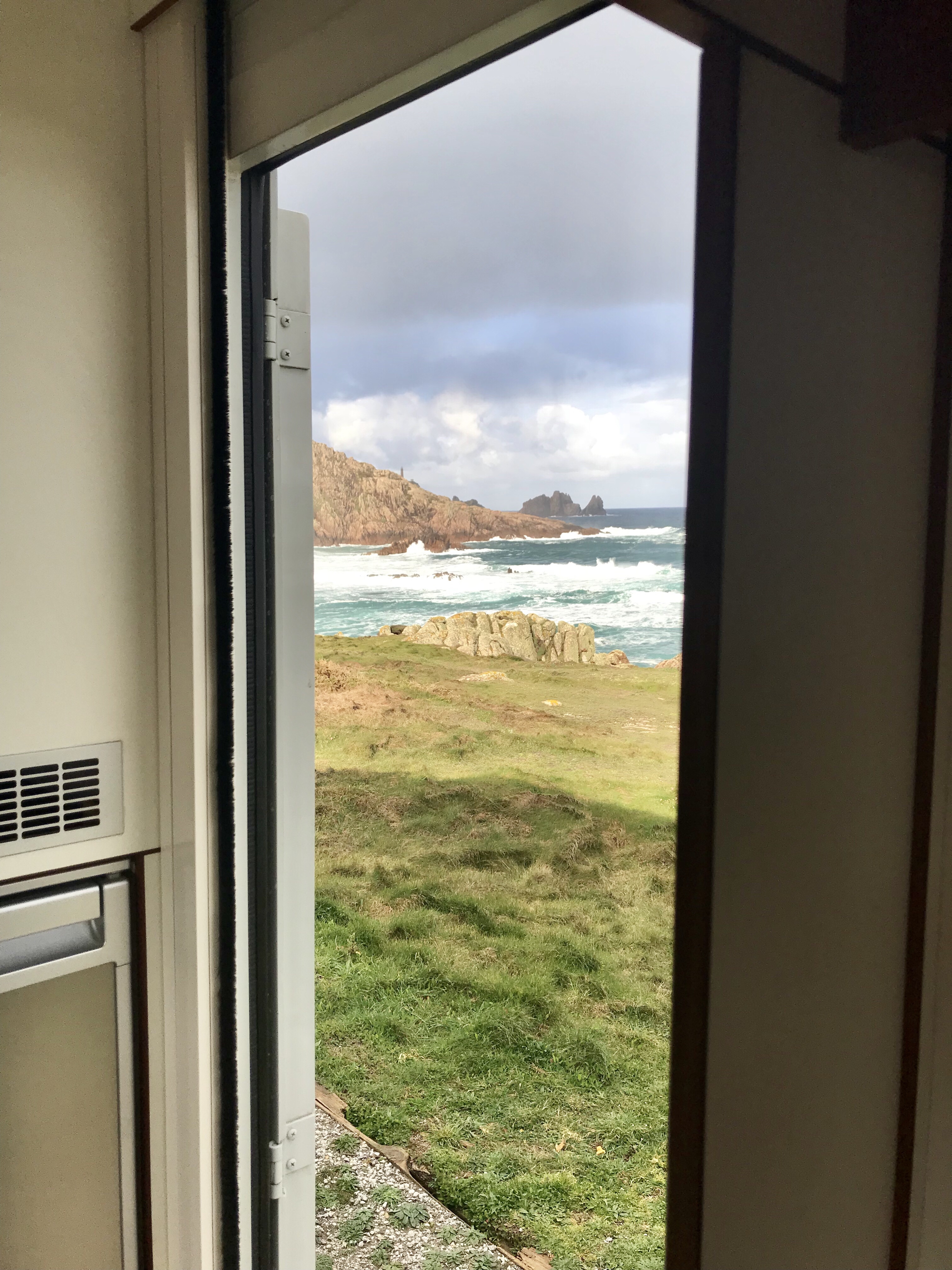
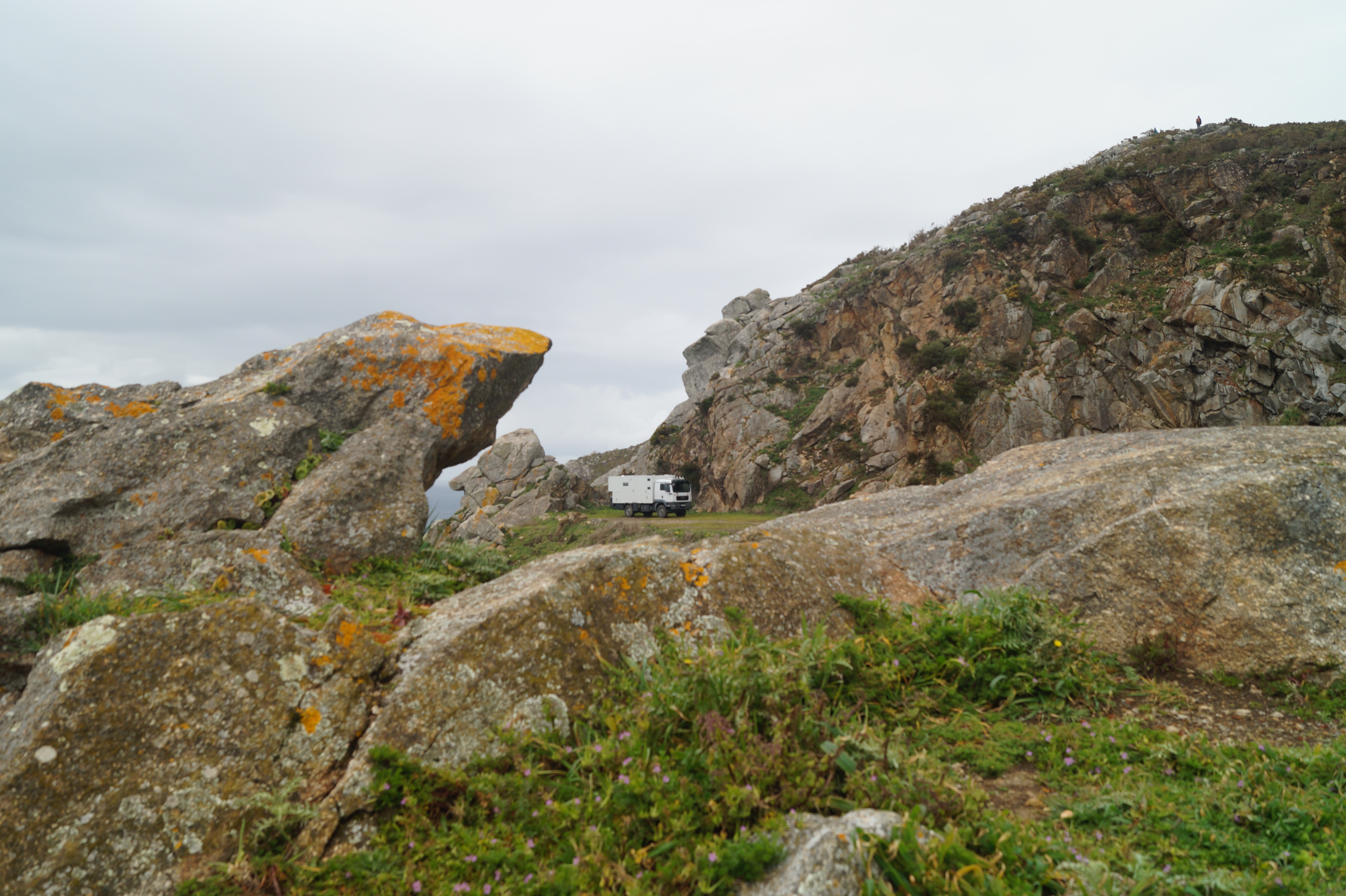 When I think of Spanish beaches, I picture the golden sanded beaches of the Mediterranean marred by the huge number of people on them. However the wild Atlantic coast of Northern Spain is something else far more exciting and exhilarating, especially in early spring. Waves crashing over huge rocks, churning white water and the taste of salt in the air and even better than that - no people. Taking a single width road through the forest, we worried we would scratch Truckie's newly painted sides to find a dead end. But instead it widened into a wide gravel track along a stunning coastline, with just a few houses trucked into canyons. That night we found out why the houses were so tucked away, as the wind and rain gales shook the truck all night. It brought back many memories of being tucked up warm and snug safe in the truck all over the world, whilst listening to storms raging outside. The place was sublime though with a wild untamed beauty with waves crashing over rocks. A couple of small sandy beaches gave Lucy plenty of space to dig and explore, whilst a puddle of tadpoles kept her happily fascinated for hours.
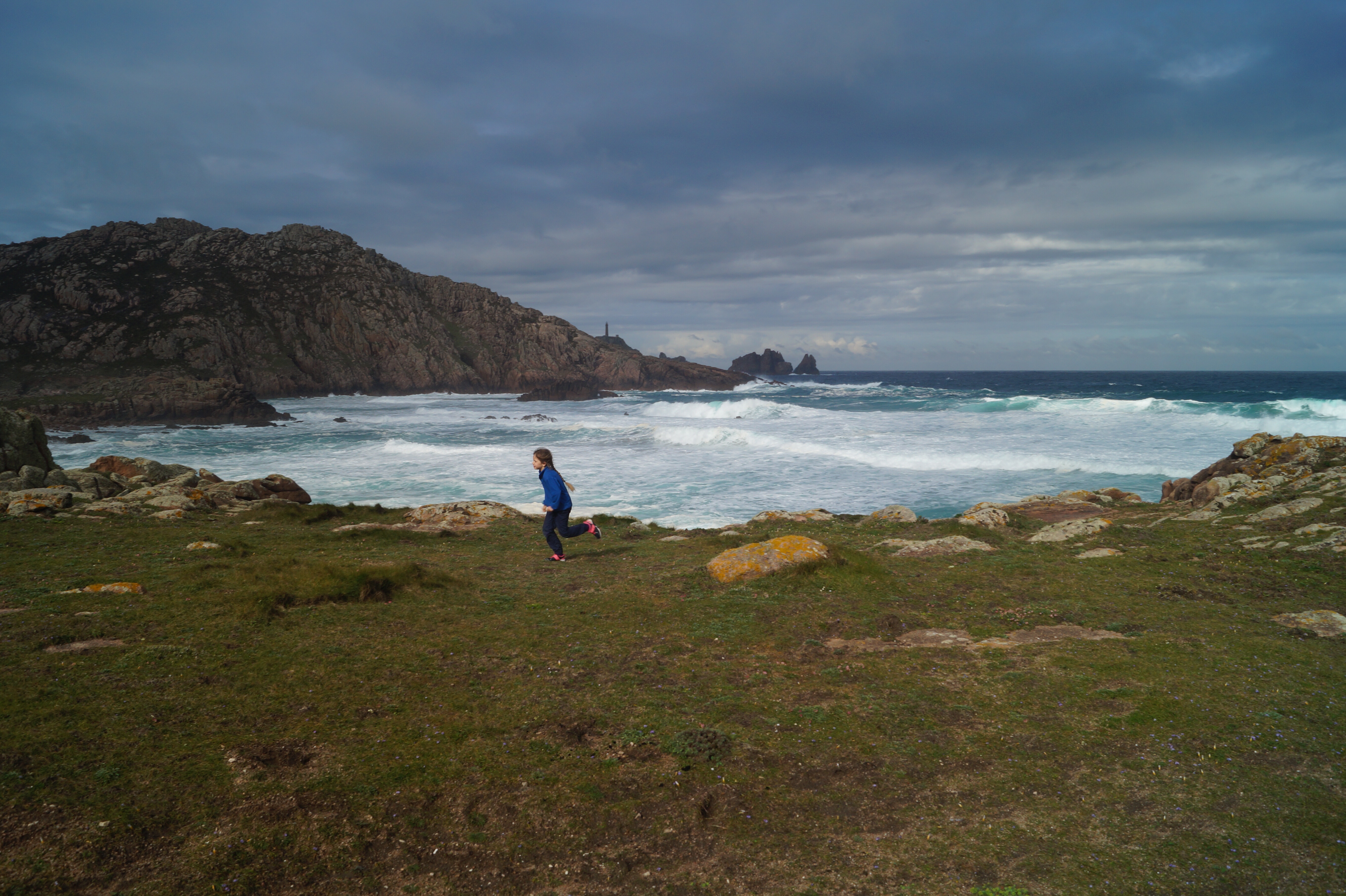
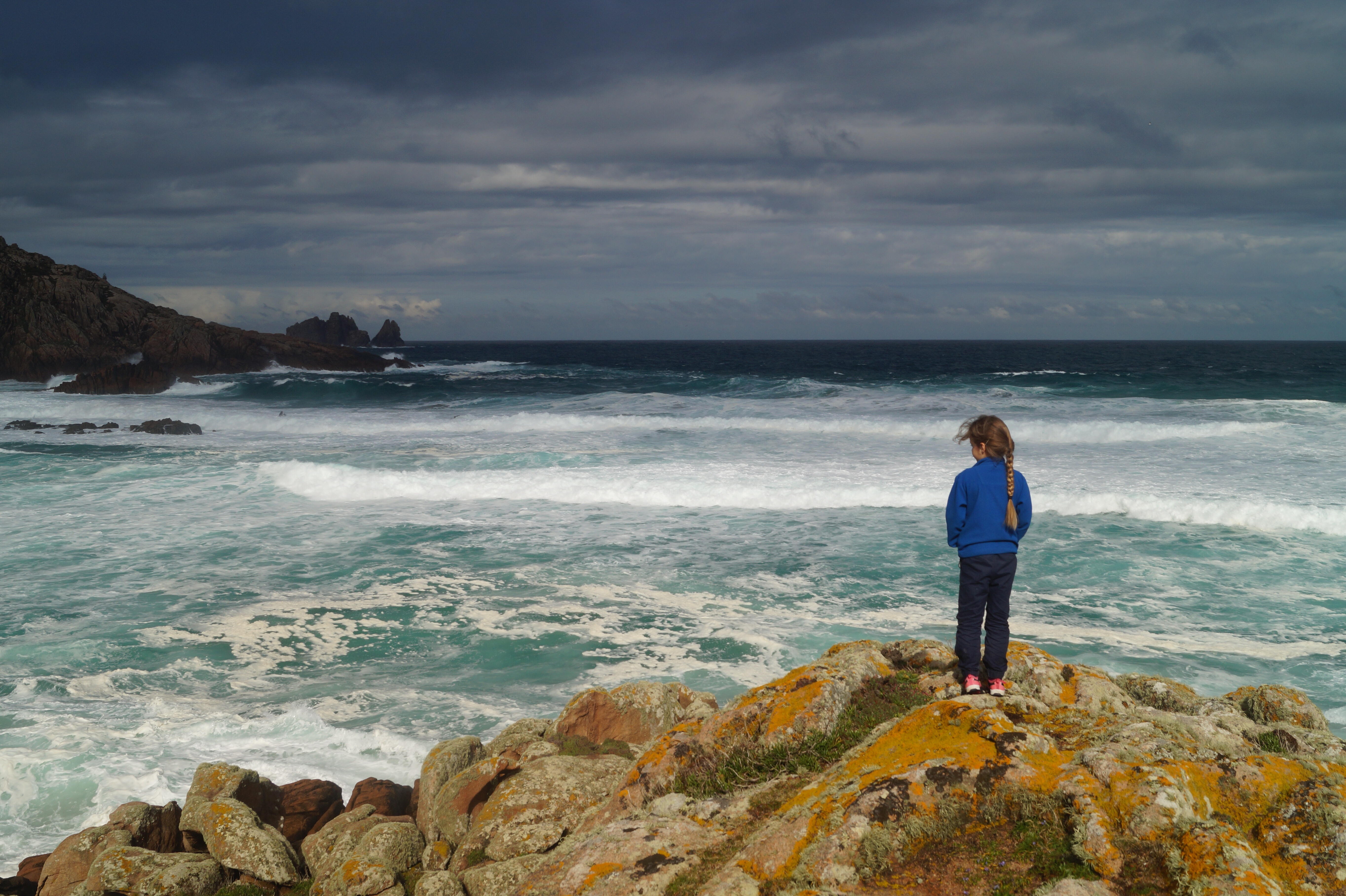
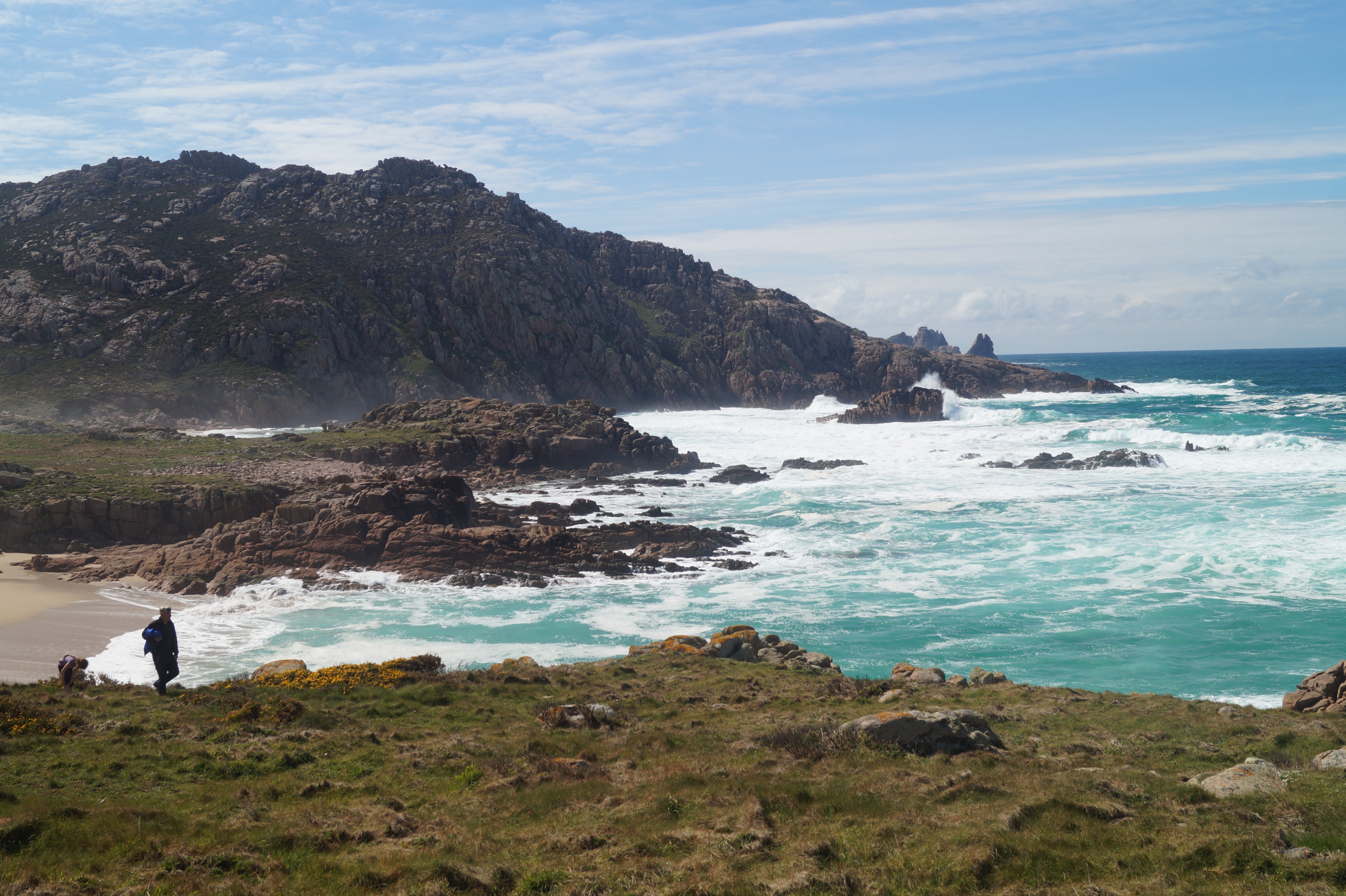
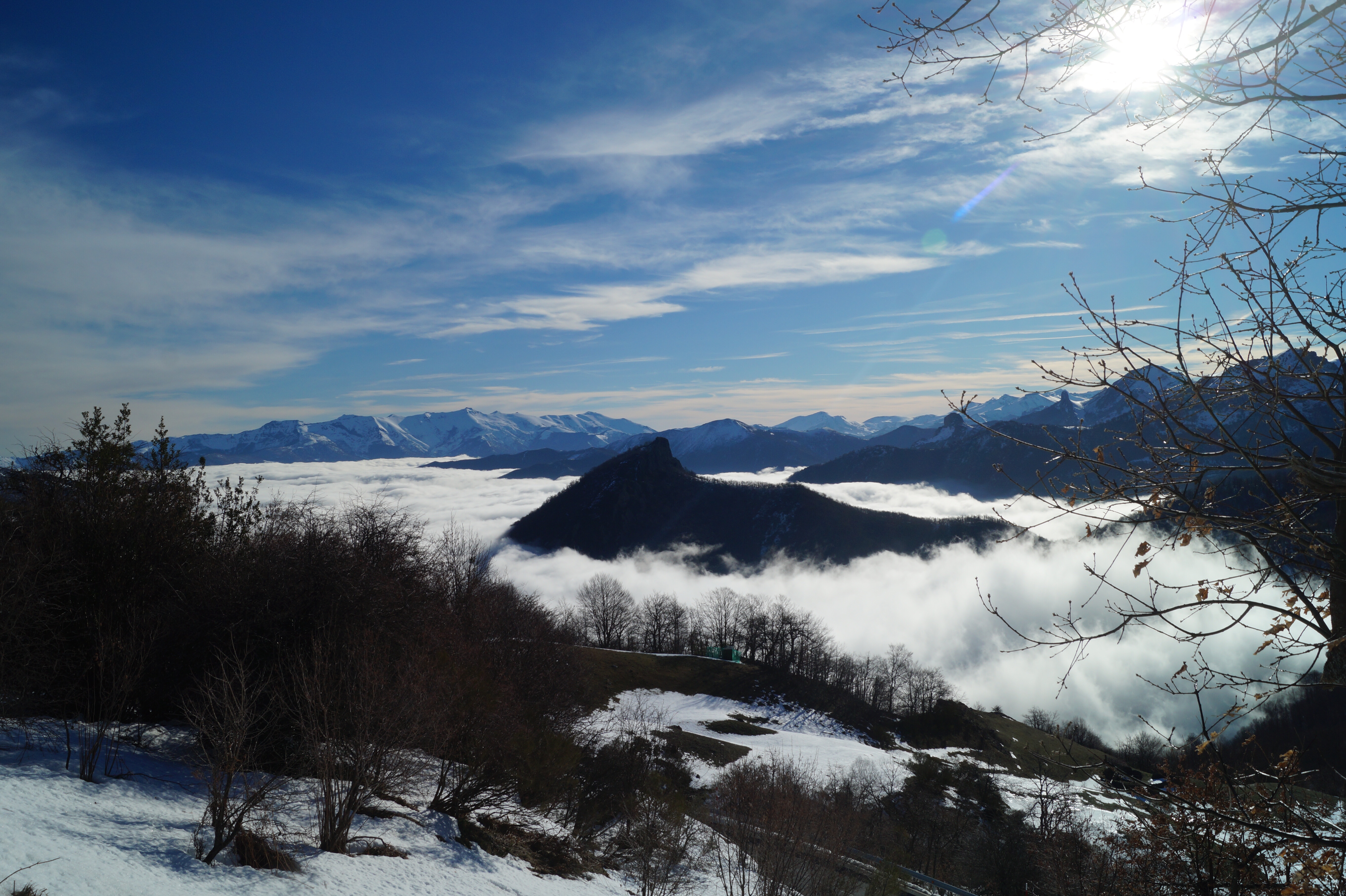
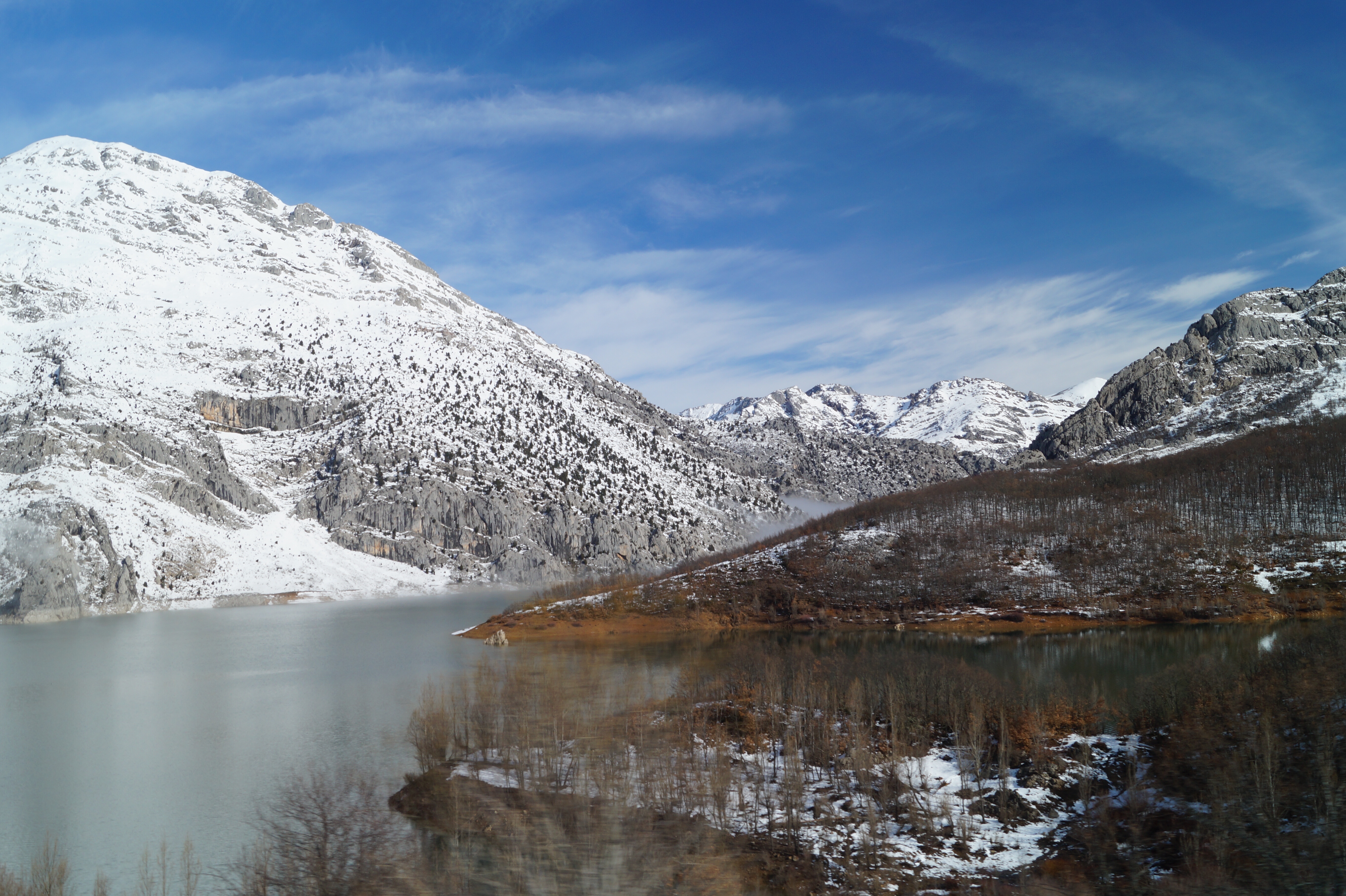
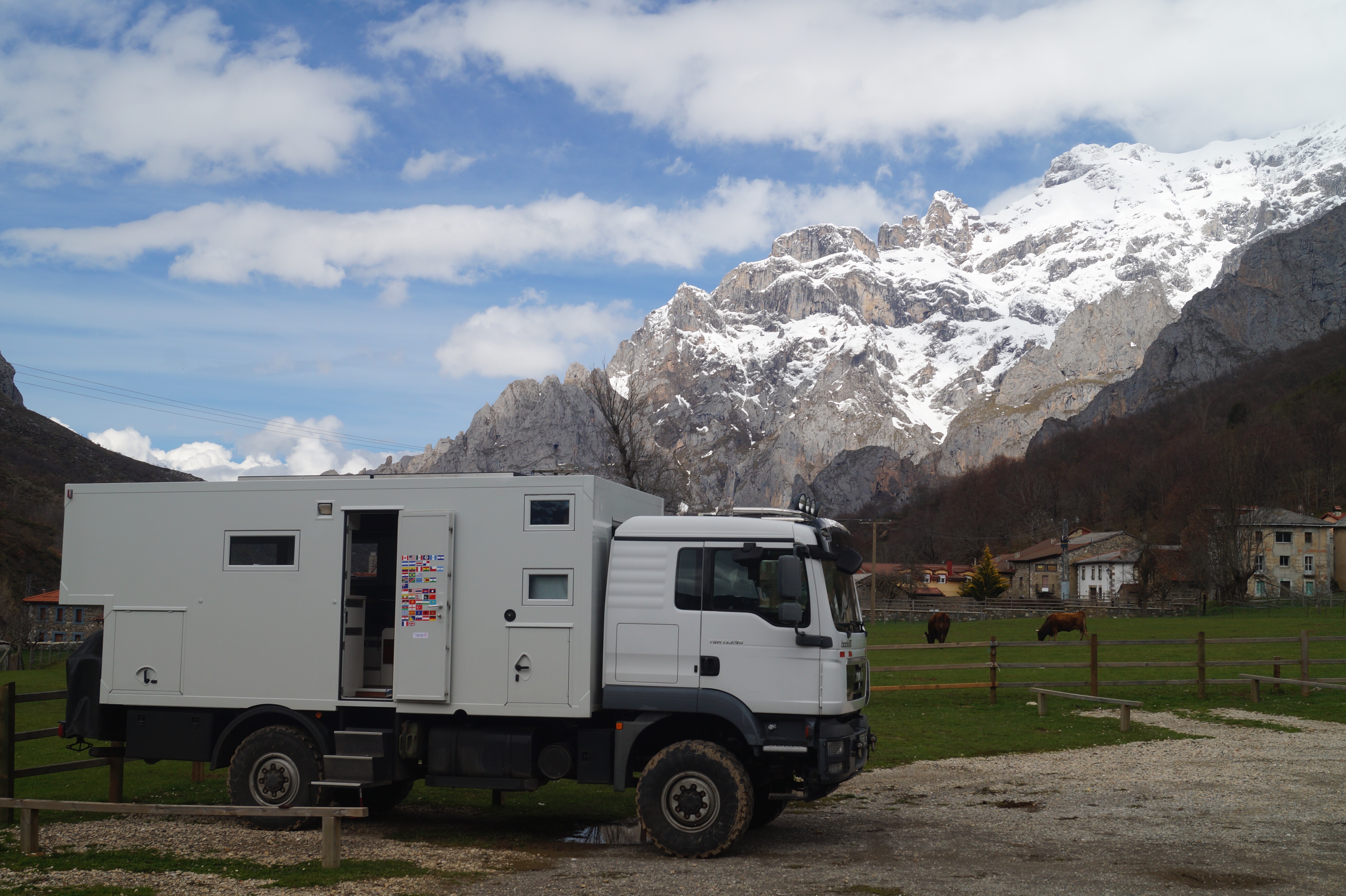
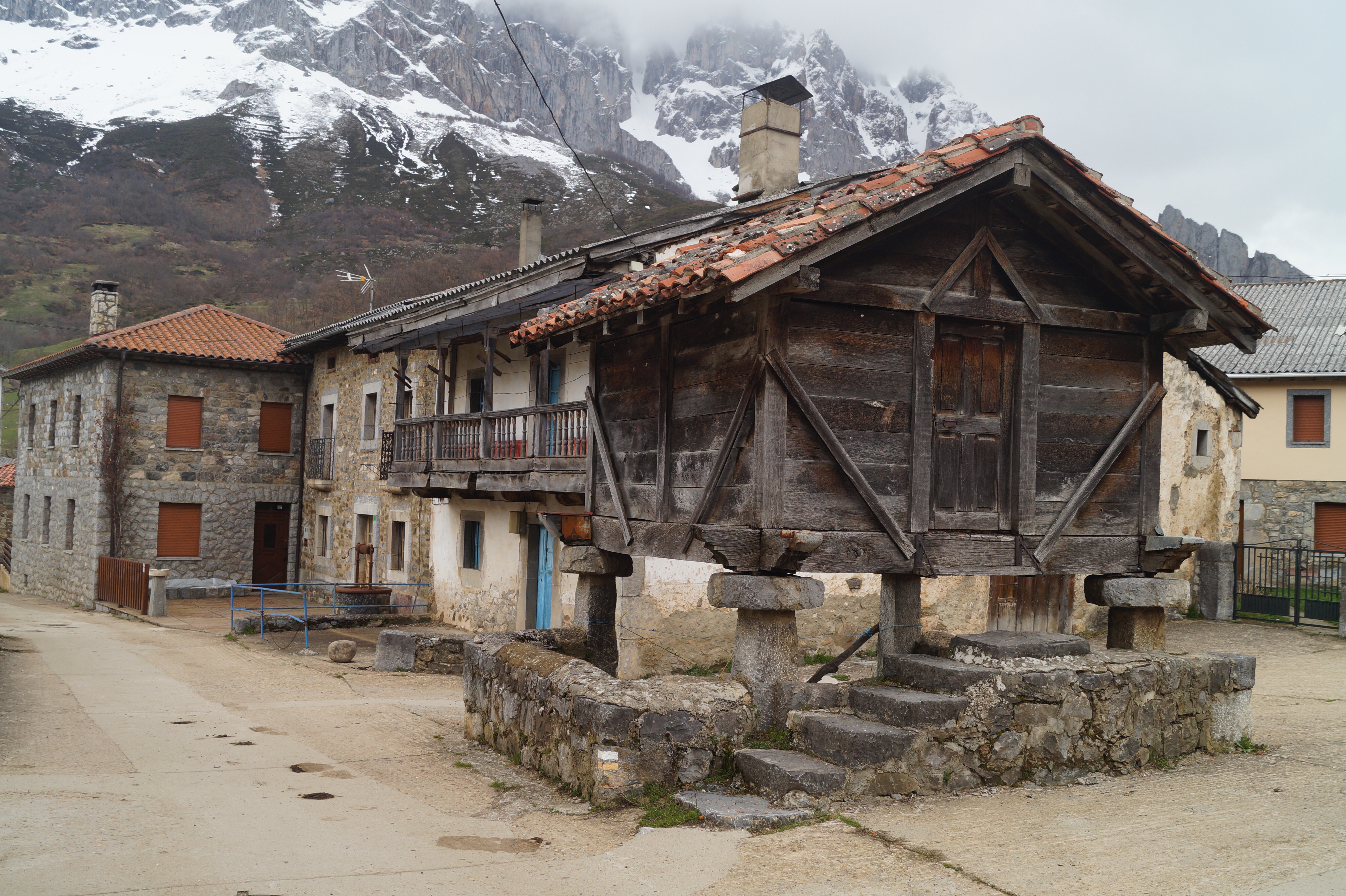
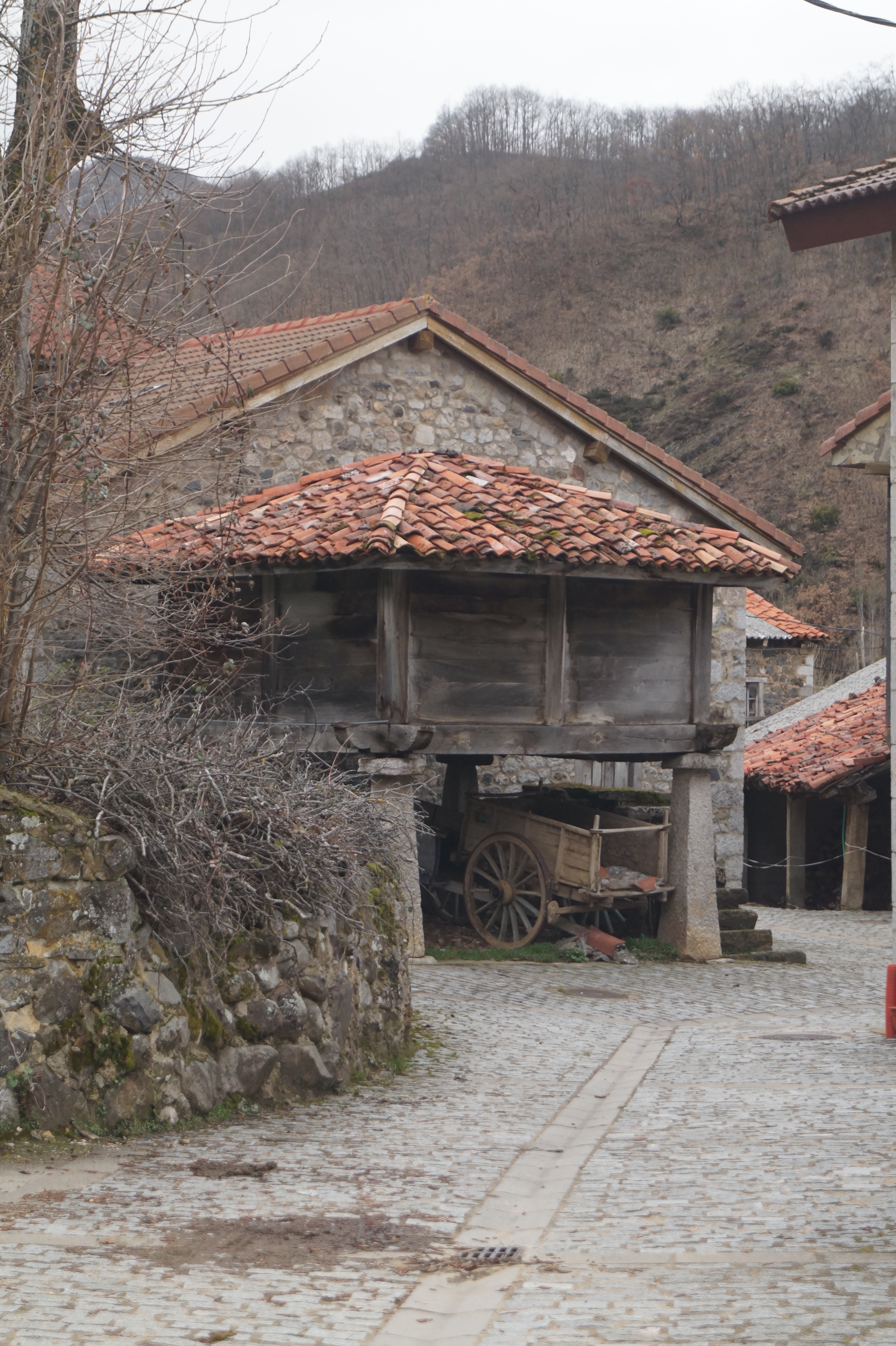
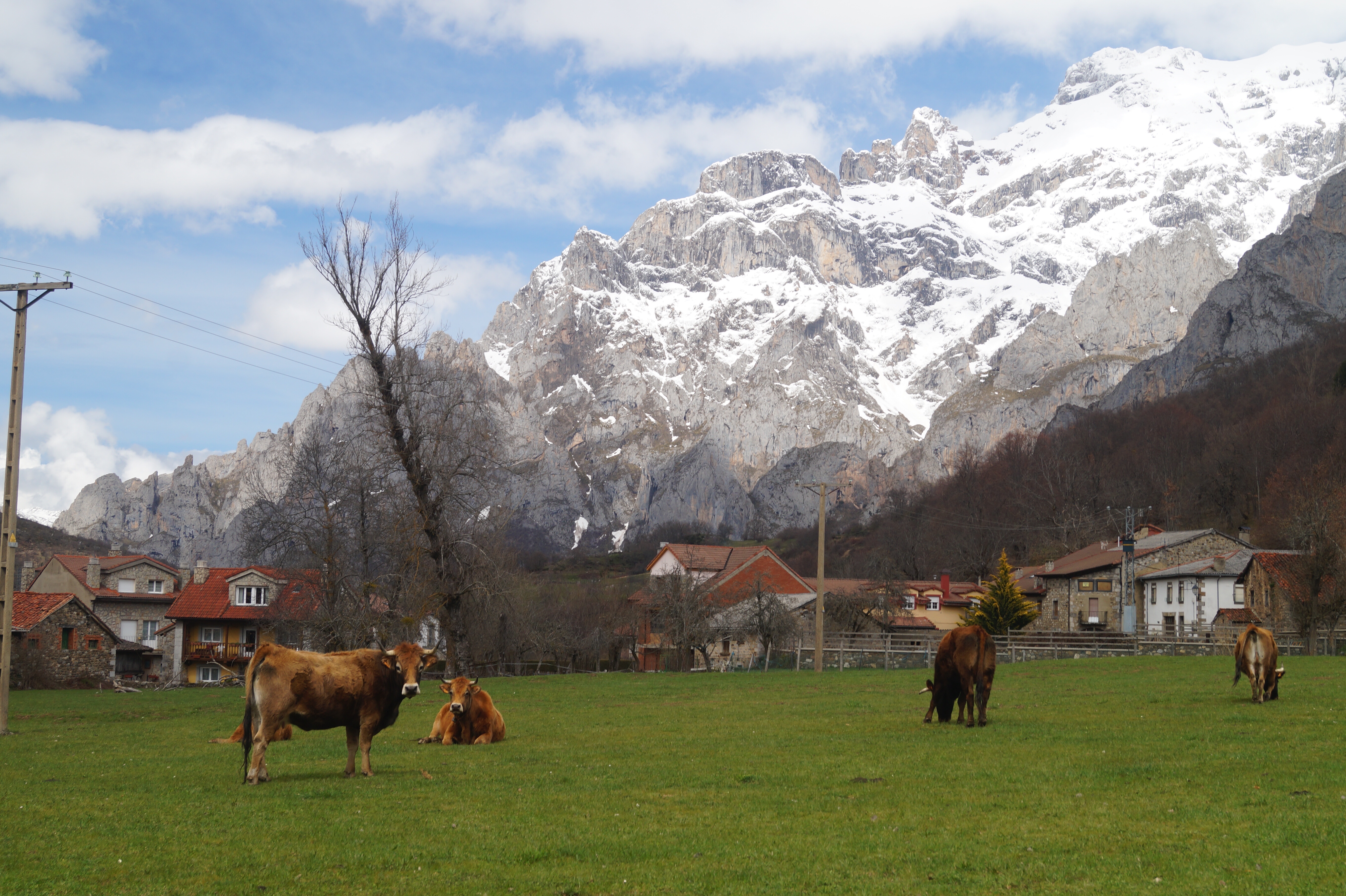
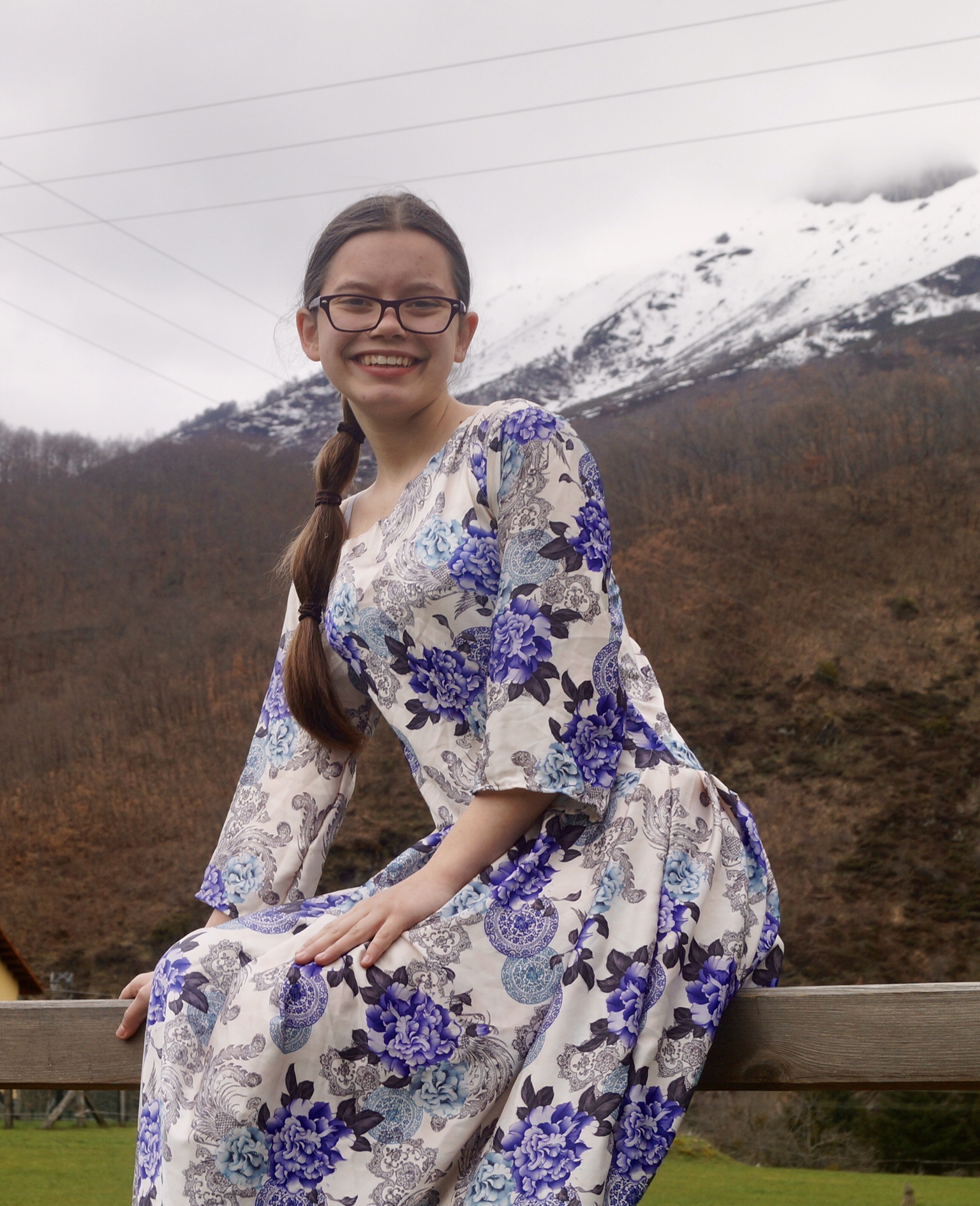
 After a couple more nights making our way along the untamed coast, the call of the mountains was too strong so we took another winding road up to the other side of the Picos de Europe National Park. Steve had got back into the swing of driving the truck and was now completely undaunted by the even narrower valley roads, even when a rockfall meant an multipoint turn to backtrack. It was well worth getting up to the tiny and almost deserted village of Posada de Valdeón, tucked into a valley surrounded by soaring pointed peaks. Round every corner of the cobbled lanes, there was another ancient, square wooden grain store raised off the ground on mushroom-shaped posts to stop mice getting in. We shared the motor home parking spot beside the modern sports hall, the biggest building around for many miles, with a couple of donkeys and fell asleep to the gentle ringing from the cow's bells from the neighbouring field. Alisha amazed us with her sewing project that she'd been stitching away at quietly in the evenings. Using the fabric she bought at Kashgar market, completely on her own, she created a fabulous dress. As the weather had closed in again, our hike along the valley the following day meant we were playing spot the peaks through the clouds. But the near views were just as engaging as we walked through terraced pastures speckled with early spring flowers and along rushing streams filled with melt waters.
 All too soon - after so many years of freedom, the school holiday restrictions are hard to get used to - it was just time to go home. We just had time for some amazing tapas in Santander before boarding the ferry home.So do we miss our vagabond trucking lifestyle? Well, yes and no. Although it has been hard settling into a more stationary life in the UK, it has much to offer us especially in terms of being with family and Alisha's education (Lucy still being home educated, can learn anywhere). And we just moved into a new house a couple of weeks before going away - which is exciting. But it was wonderful being back in the truck, seeing and experiencing new things every day and we all slept so well in our old beds.
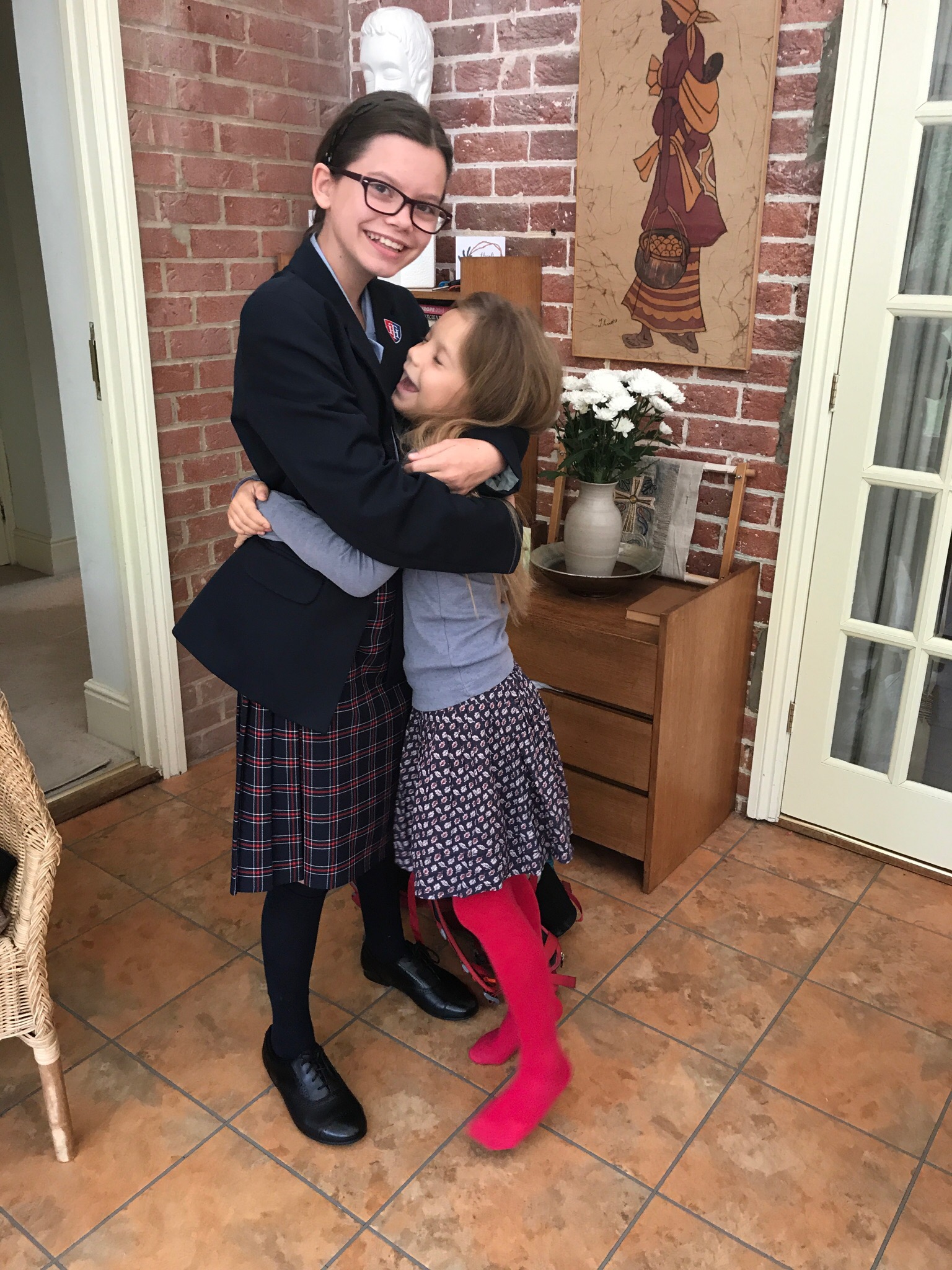 Lucy has had less of a change, happy being homeschooled and with the difficulty of finding out exactly what the local primary schools were like whilst we were on the road, we decided to keep her homeschooled for the time being. The popularity of home education in Hampshire, means that there are a whole load of interesting group activities for her take part in.
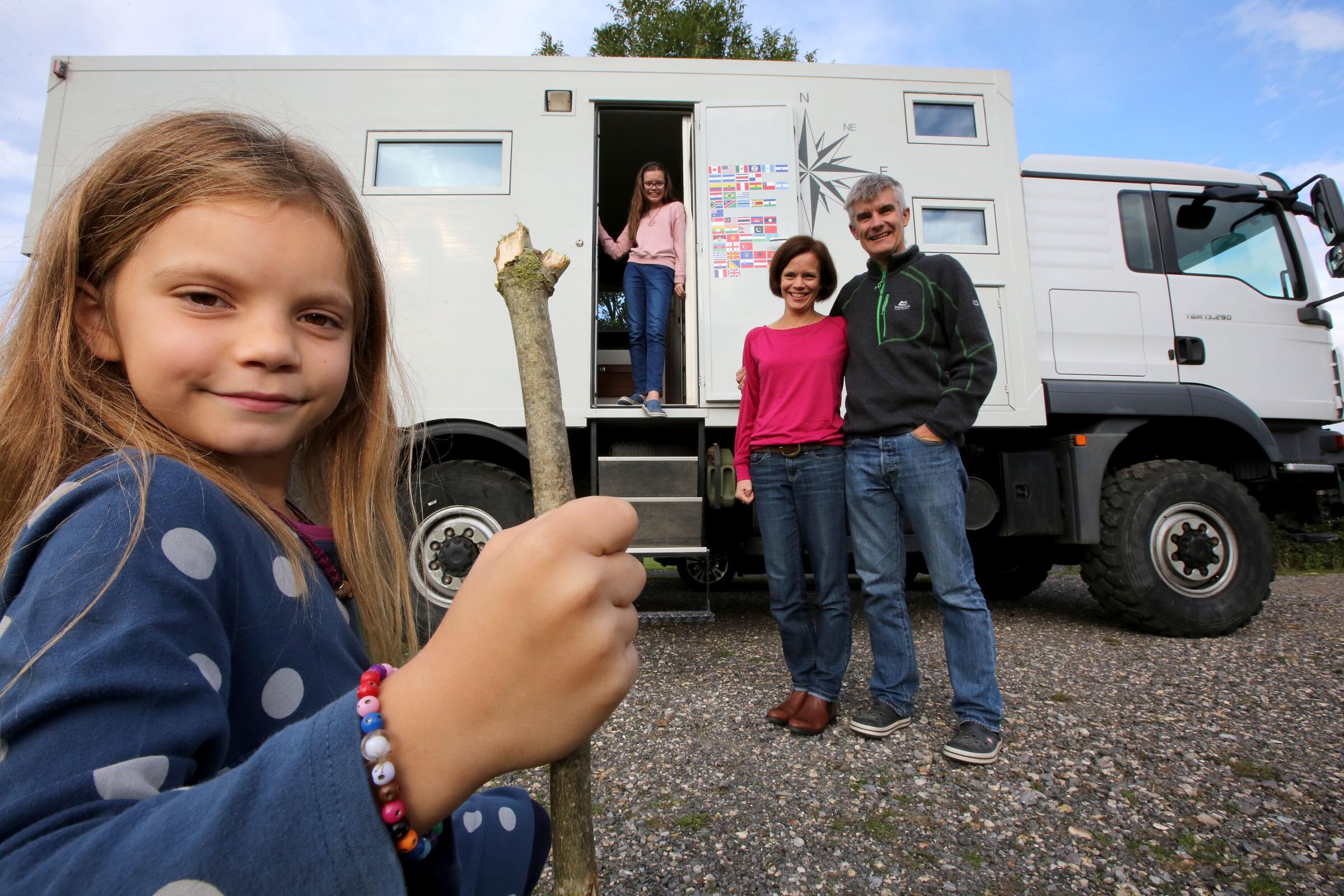
 Eventually we got the cottage back but soon decided that if we are going to be stationary somewhere for the next 10 years, that perhaps it isn't the house for us, so we are keeping our eyes out for somewhere else nearby. We can't quite work out if we are country folk or city people, the joy of living in the truck was we didn't have to choose as we could do a mix of both. Rural England, especially the New Forest, is gorgeous and good for the soul but we hate jumping into the car to do anything. That might sound a bit peculiar from someone who has spent 4 years driving around the world but it seems like we spend far more time on the road now.
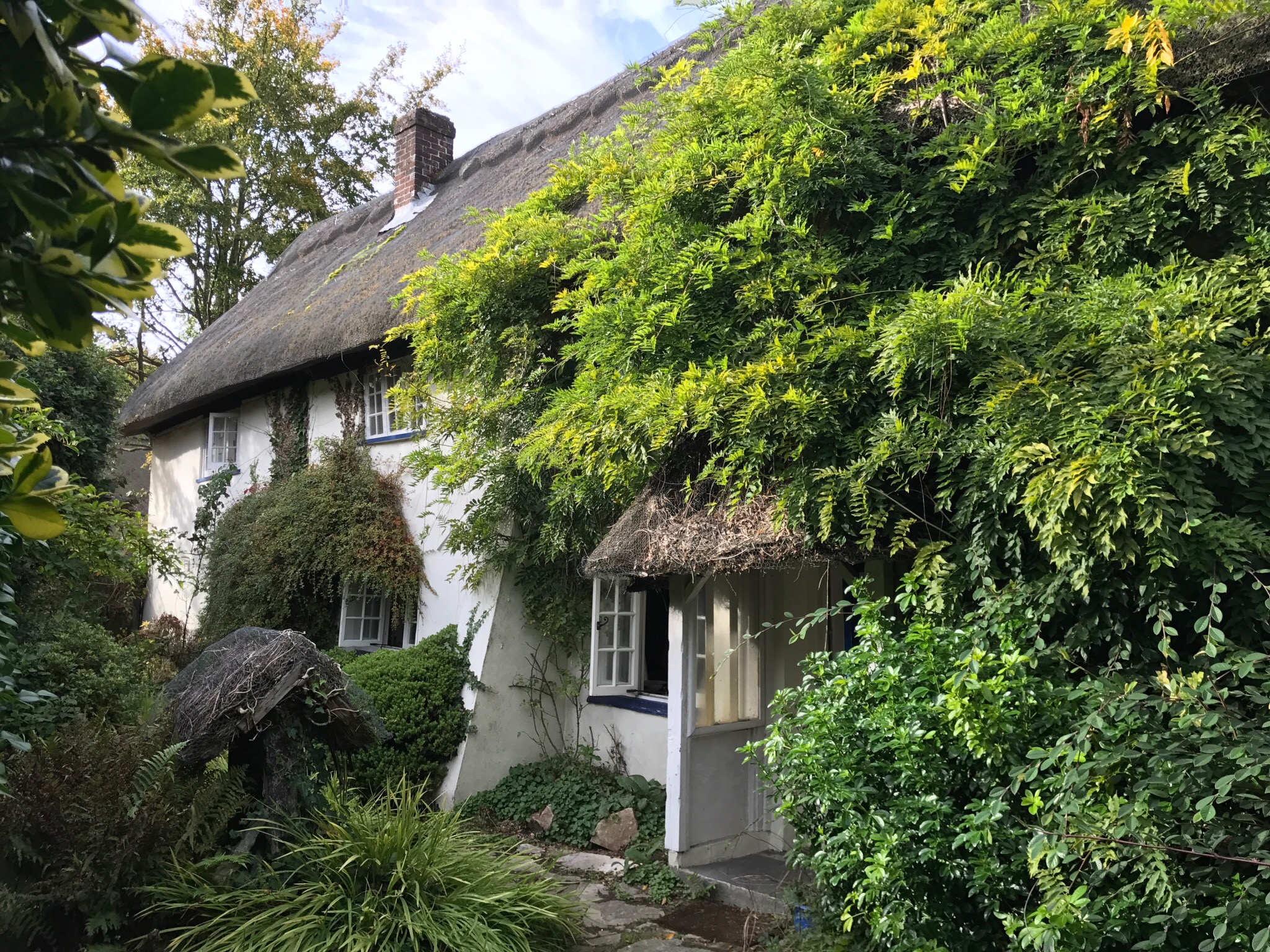
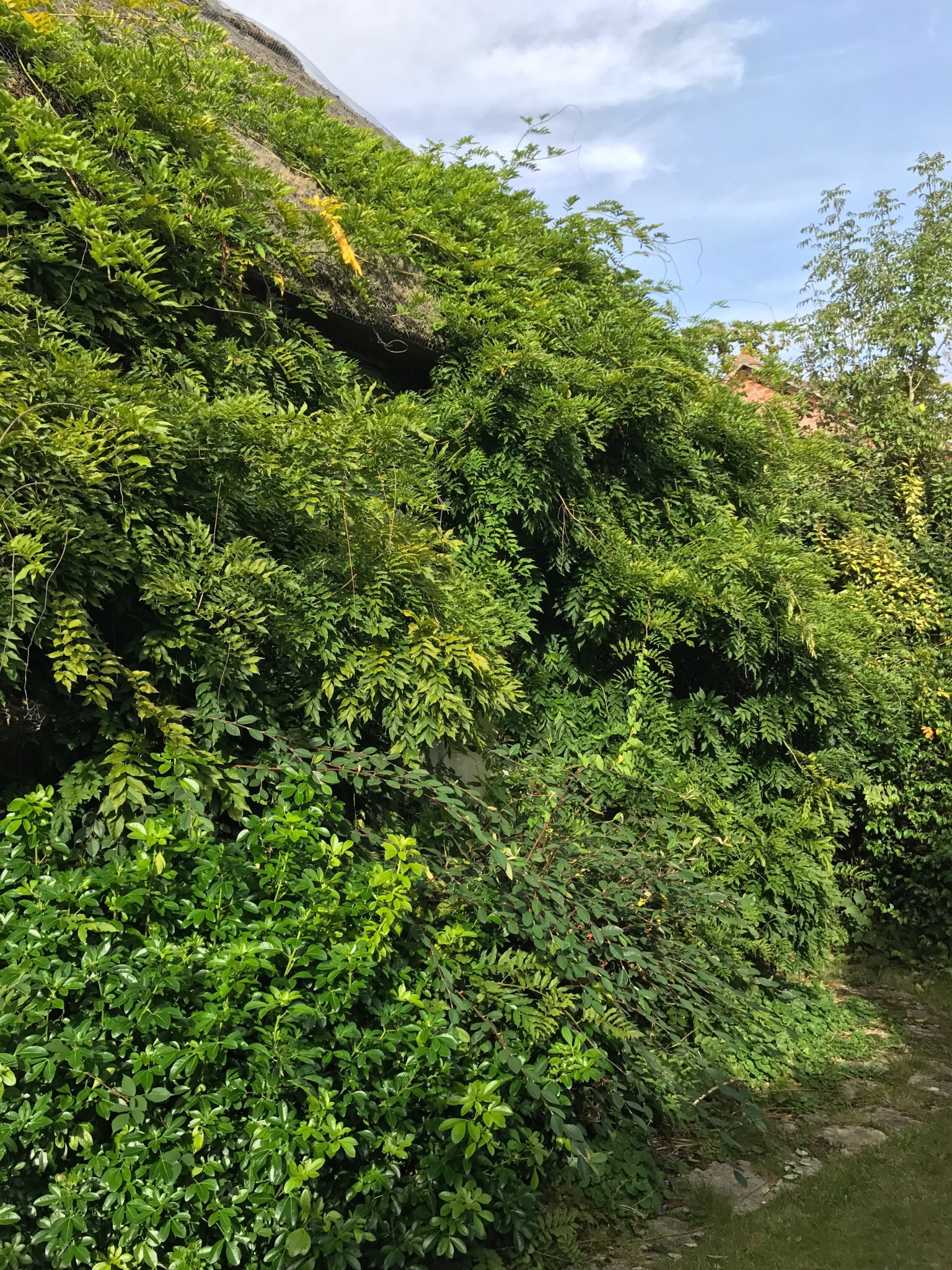 There's a house in there somewhere - once we got back into our cottage there was quite a lot of work to do.